Famous Logos Teach Us About Script Typography
Script logos look effortless. That's the illusion — and the hardest part of pulling one off.
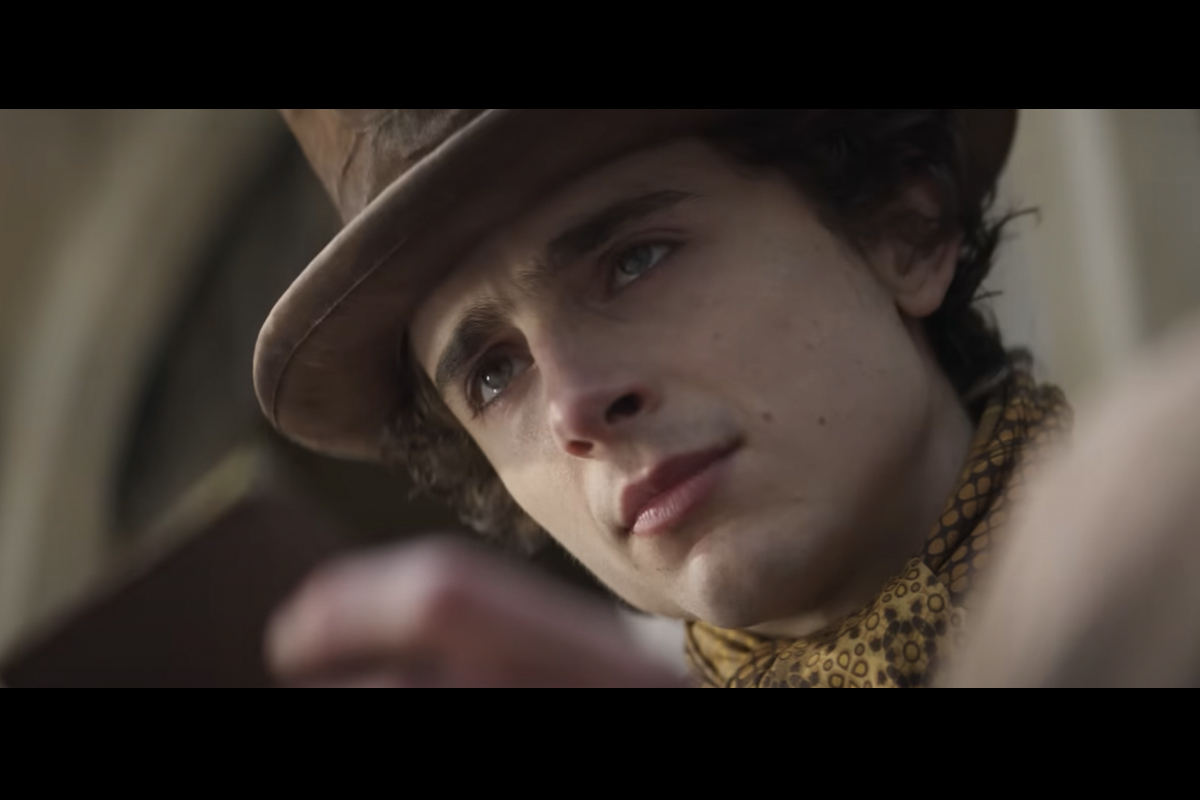
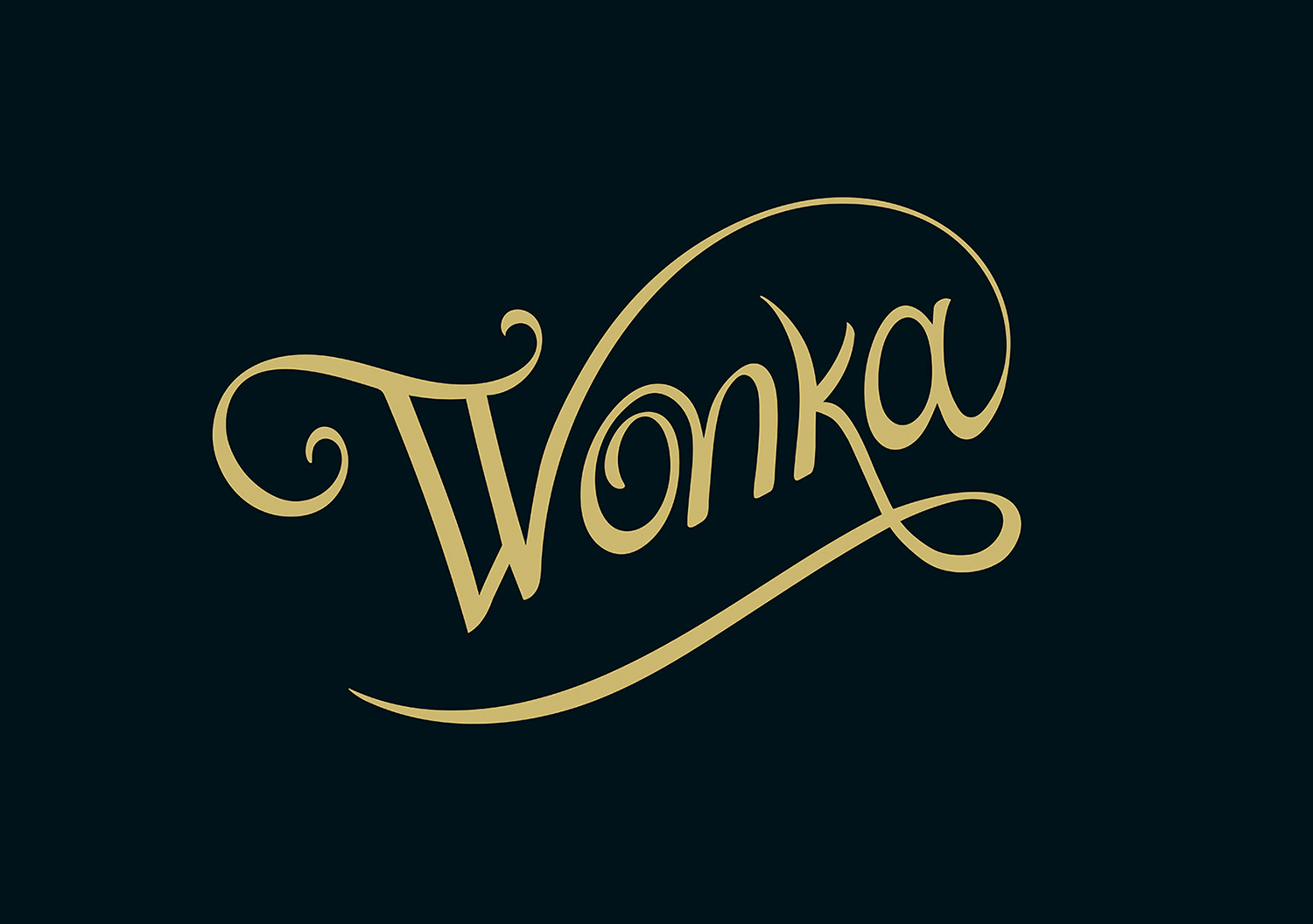
When designer Alexandria Vernon was commissioned to create the logo for the 2023 Wonka film, the brief wasn't "make it look nice." It was far more specific: the lettering had to evoke a mother's handwriting from a single scene early in the film. That kind of emotional anchor is what separates decorative script from meaningful brand typography.
Here's what the Wonka logo process teaches us about designing with script type — whether you're building a logo for a bakery, a boutique, or your own brand.
Start With the Anchor Letter, Not the Full Word
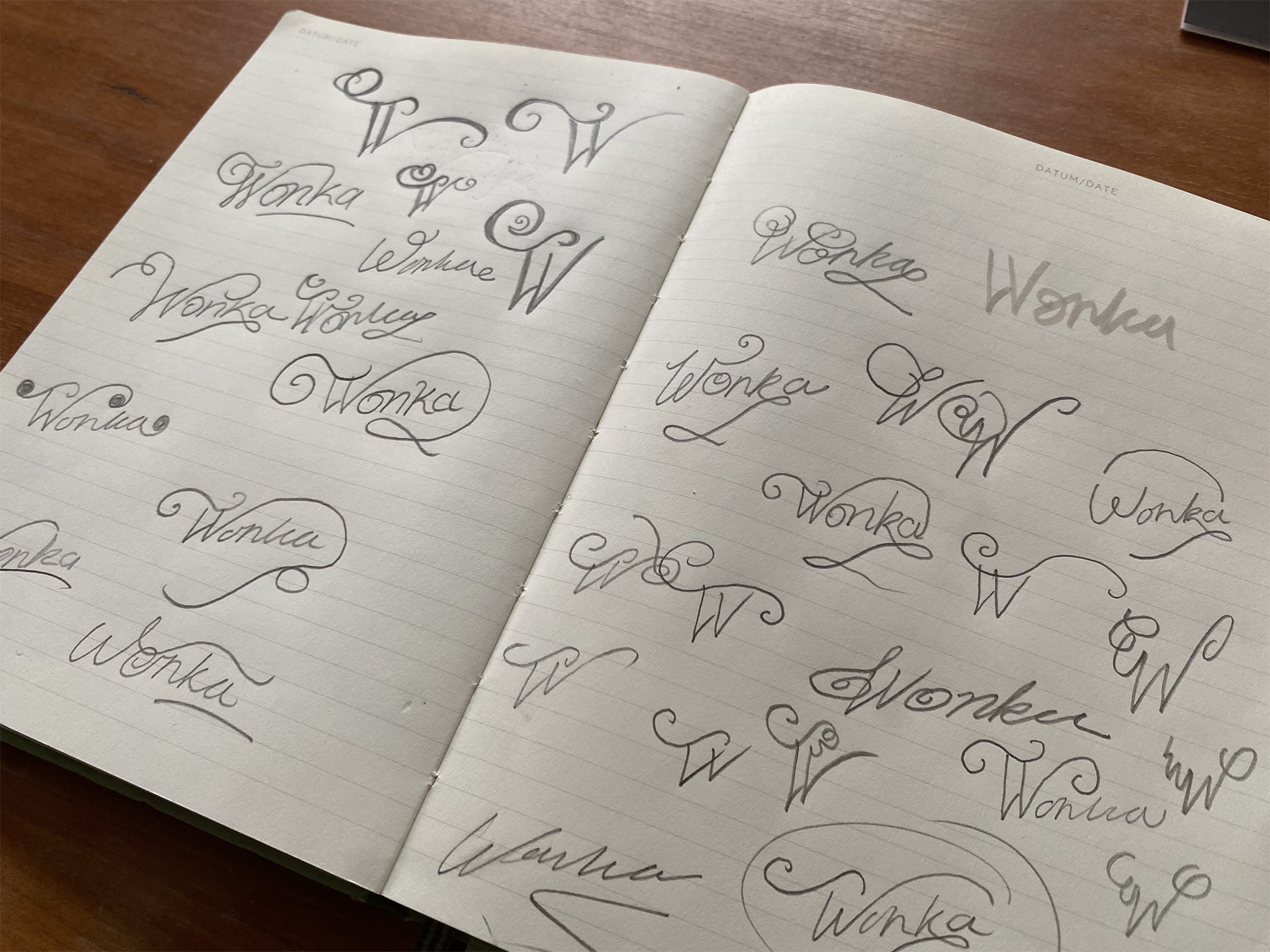
In any script or calligraphic logo, one letter carries the visual weight of the entire mark. For Wonka, that letter was the W.
The W received the most exploration — elaborate ascenders, flourished entry strokes, dramatic contrast between thick and thin. Once the W was solved, the rest of the lettering had to follow its lead.
This is the correct order of operations for script logo design:
- Identify your dominant letter (usually the first, or the one with the most stroke variety)
- Solve that letter completely — proportion, weight, flourish level
- Design the remaining letters to complement it, not compete with it
If you start with the full word and try to "fix" it letter by letter, you end up with inconsistency. Anchor first, harmonize second.
The Ascender-Descender Balance Problem
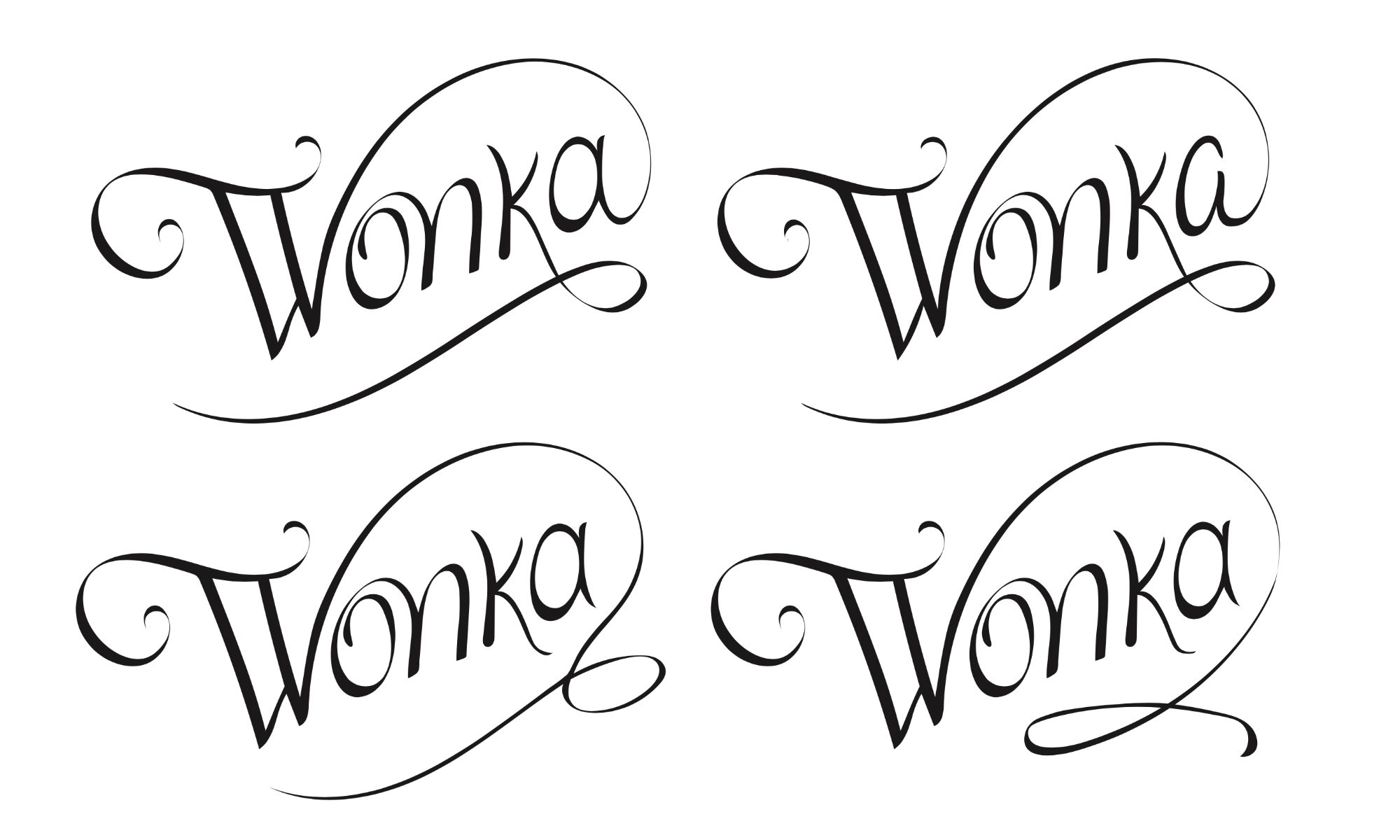
The most technically challenging part of the Wonka logo was getting the W's flourished ascender to balance against the descender of the k.
This is a real structural problem in script typography, not just an aesthetic one. When you have:
- A tall, elaborate opening letter with upward flourishes
- A later letter with a strong downward stroke
...the visual "weight" of the word tilts. The eye reads top-heavy, then bottom-heavy, which creates unease.
The fix is visual mass, not just height. Adjusting the thickness of the k's descender loop, the angle at which it exits the stroke, or adding a subtle terminal flourish that mirrors the W's entry — these micro-adjustments redistribute visual weight across the word.
For your own script logos: print them out and squint. If one end of the word feels heavier than the other, it usually is. Stroke weight and flourish size are your levers.
Iteration Isn't Failure — It's the Method
The Wonka project went through "a fair few rounds of iterations and tweaks." This is not a sign something went wrong. This is how script logo design works.
Unlike geometric or wordmark logos where you can validate decisions with a grid and mathematical relationships, script lettering is evaluated optically. The eye is the instrument. No amount of planning eliminates the need to see it rendered, printed, placed in context, and reviewed.
What does a healthy iteration process look like?
- Wide exploration early: Don't refine too soon. Generate 10–20 W variations before picking one direction.
- Freeze the anchor letter before moving on: Once the dominant letter is approved, lock it. Changes to it cascade through everything.
- Test at actual use size: A script logo that looks balanced at 2000px may fall apart at 200px when thin strokes disappear.
- Isolate the problem in feedback rounds: "The whole thing feels off" is not actionable. "The k's descender is pulling the eye down and away from the word" is.
Script Weight and Stroke Contrast
One thing you can observe clearly in the Wonka logo: dramatic contrast between thick downstrokes and thin upstrokes. This is the defining characteristic of pointed pen calligraphy — the model that most script logos draw from.
The rule: pressure on downstrokes, lightness on upstrokes. This creates:
- A sense of natural handwriting rhythm
- Visual interest across the letterforms
- A hierarchy within each letter (the eye follows the thick strokes)
For SMB logo design, this contrast level is a stylistic dial. High contrast (think Coca-Cola) = elegant, premium, vintage. Low contrast (more uniform stroke weight) = friendly, approachable, modern. Your stroke contrast choice communicates personality before anyone reads the word.
How Flourishes Earn Their Place
The Wonka W has elaborate flourishes. They're not decoration — they serve two functions:
1. Narrative reference: The brief required the logo to evoke a specific person's handwriting. Flourishes are personality markers in script. They communicate the hand behind the pen.
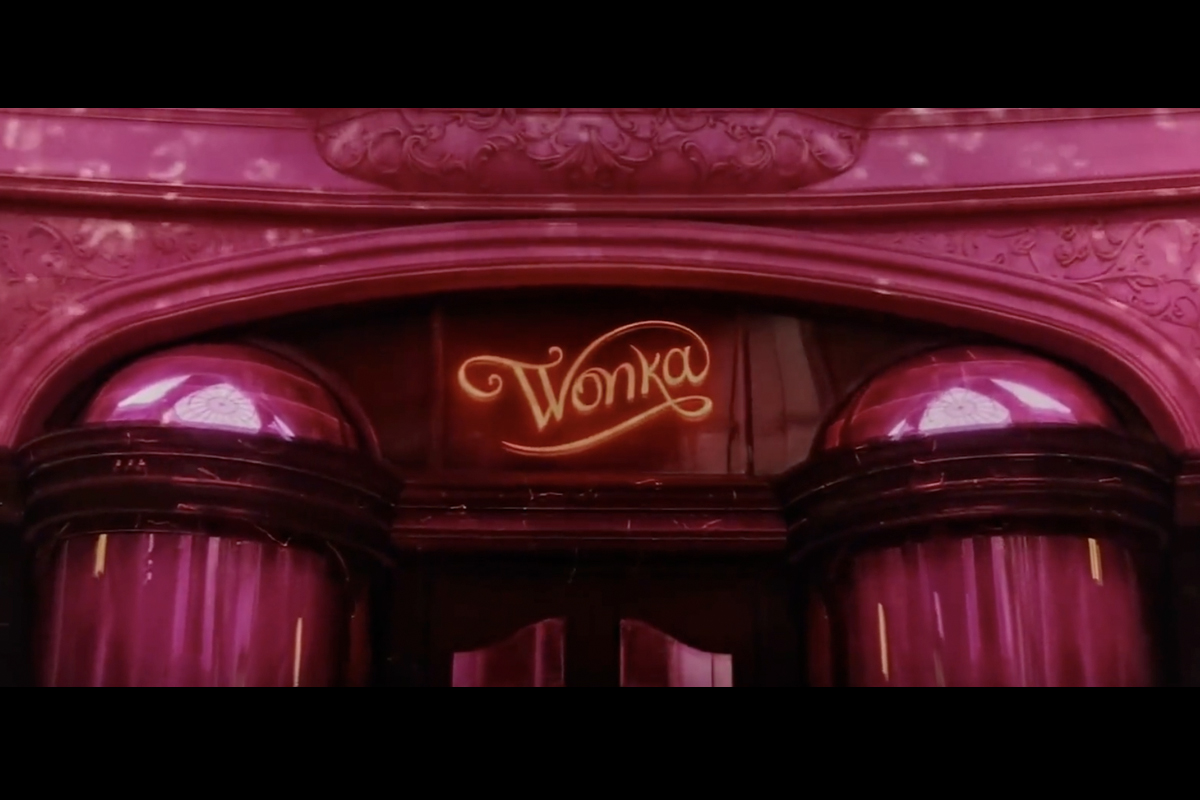
2. Compositional framing: A large, flourished initial letter creates visual space around itself. It signals "this word is important" before you read it. In a film title card, that's essential — the logo has about two seconds of screen time to register.
The mistake most DIY script logos make is adding flourishes for beauty rather than function. A flourish that doesn't serve composition or storytelling is visual noise.
Ask before adding any flourish: Does this help the eye enter or exit the letter? Does it balance something? Does it tell the viewer something about the brand's personality? If the answer to all three is no, cut it.
Script Logos in Context: Film vs. Brand
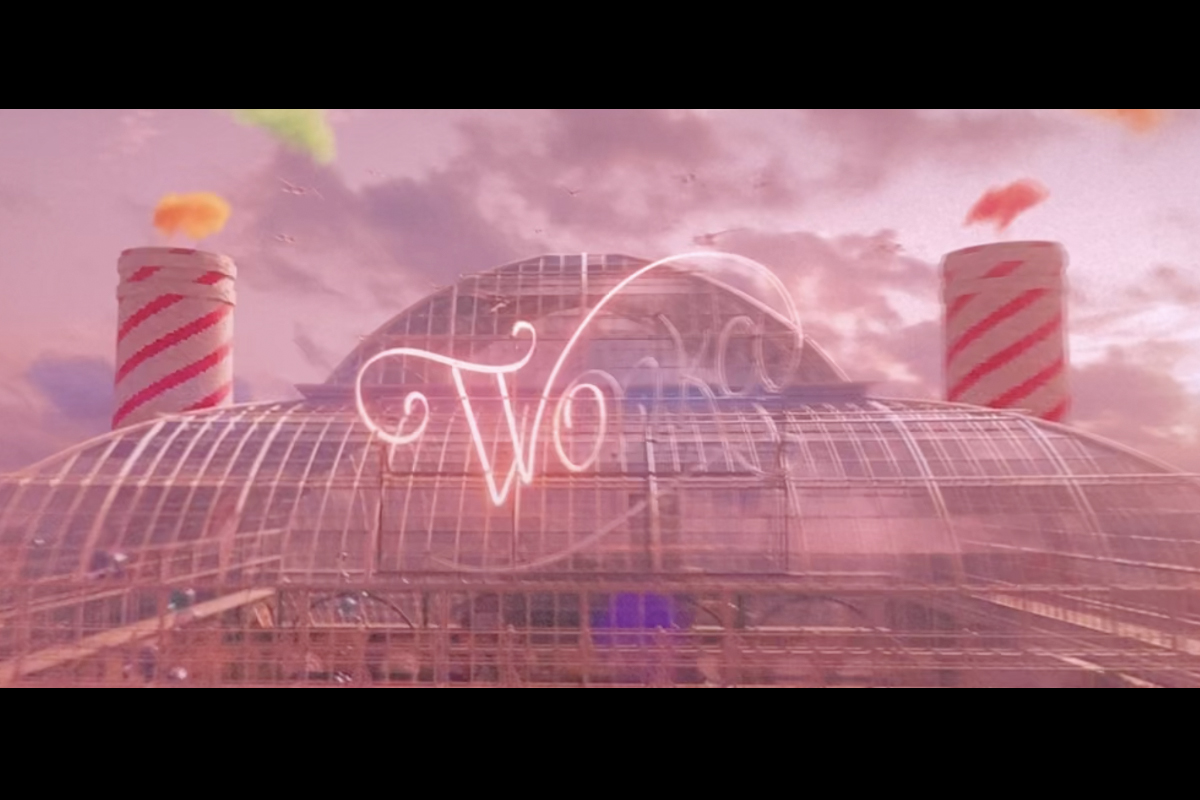
The Wonka logo was designed to live on a cinema screen — enormous, backlit, surrounded by darkness. This is a very different context from a business card, a storefront sign, or a social media avatar.
For your own brand, script logos face a harder environment. They need to work:
- At 16px in a browser tab favicon (almost certainly as an initial, not the full word)
- Reversed out of a dark background
- In single color (no gradient, no shadow)
- Next to sans-serif body text without looking out of place
The practical implication: if you choose a script logo for your business, you almost always need a simplified alternate — a single initial mark, or a paired sans-serif wordmark for small-size use. Script logos rarely survive the favicon test alone.
What SMB Owners Should Take Away
You don't need to hand-letter your own logo. But understanding what makes script typography work helps you brief a designer clearly and evaluate what you're receiving.
The questions to ask:
- Where is the visual anchor? Which letter is doing the most work, and is it the right one?
- Is the stroke contrast intentional? High contrast = formal/premium. Low contrast = casual/friendly. Does it match what you're selling?
- Do the flourishes serve a purpose? Or are they just filling space?
- Does the ascending/descending balance feel stable? Print it and check with fresh eyes.
- Does it survive small sizes? Test it at favicon scale before committing.
Script logos built on these principles aren't just beautiful in isolation — they work across every touchpoint where your brand appears. That's the difference between a logo that photographs well and one that actually builds recognition over time.