How to Design a Logo That Feels Warm
A logo's job isn't just to identify a business — it's to make someone feel something before they've read a single word. For food brands competing in crowded urban markets, that feeling needs to be immediate: warmth, appetite, trust.
The Shoop soup brand logo does exactly this. Designer Lizzie Frost created a mark that punches well above its weight for a small Fitzrovia lunch spot — and there are several specific techniques buried in the work that apply far beyond the food industry.
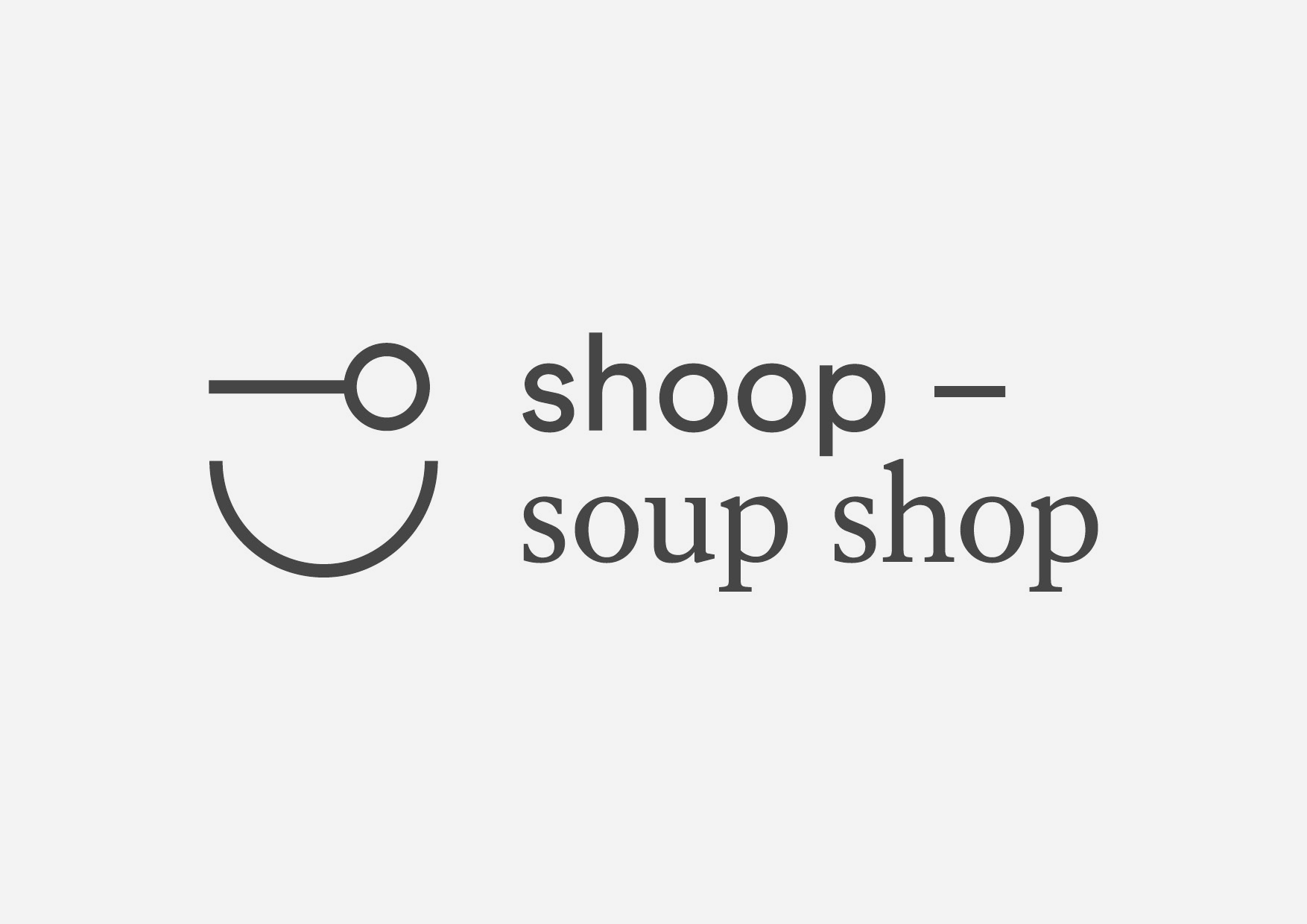
The Mascot Subtlety Principle
Mascot logos fail in one of two ways: they're either too literal (a cartoon chef holding a bowl) or too abstract (a squiggle that "suggests" food). The winking spoon-and-bowl mark here avoids both traps.
The key is restraint in expressiveness. A single wink is enough personality. The spoon's curve becomes the bowl's rim — one shape doing double duty. This is the foundation of effective mascot design: every element must earn its place by serving multiple visual roles simultaneously.
When designing a mascot for your own brand, ask yourself:
- Can I reduce this by 30% and still communicate the same idea?
- Is any element only decorative, not structural?
- Does the personality come from shape, not added details like eyebrows or hands?
A mascot that needs explanation has already failed.
Why Geometric Simplicity Scales Better
Notice how the bowl and spoon are constructed from near-perfect geometric primitives — arcs, circles, clean curves. This isn't laziness. It's a deliberate technical choice with real-world consequences.
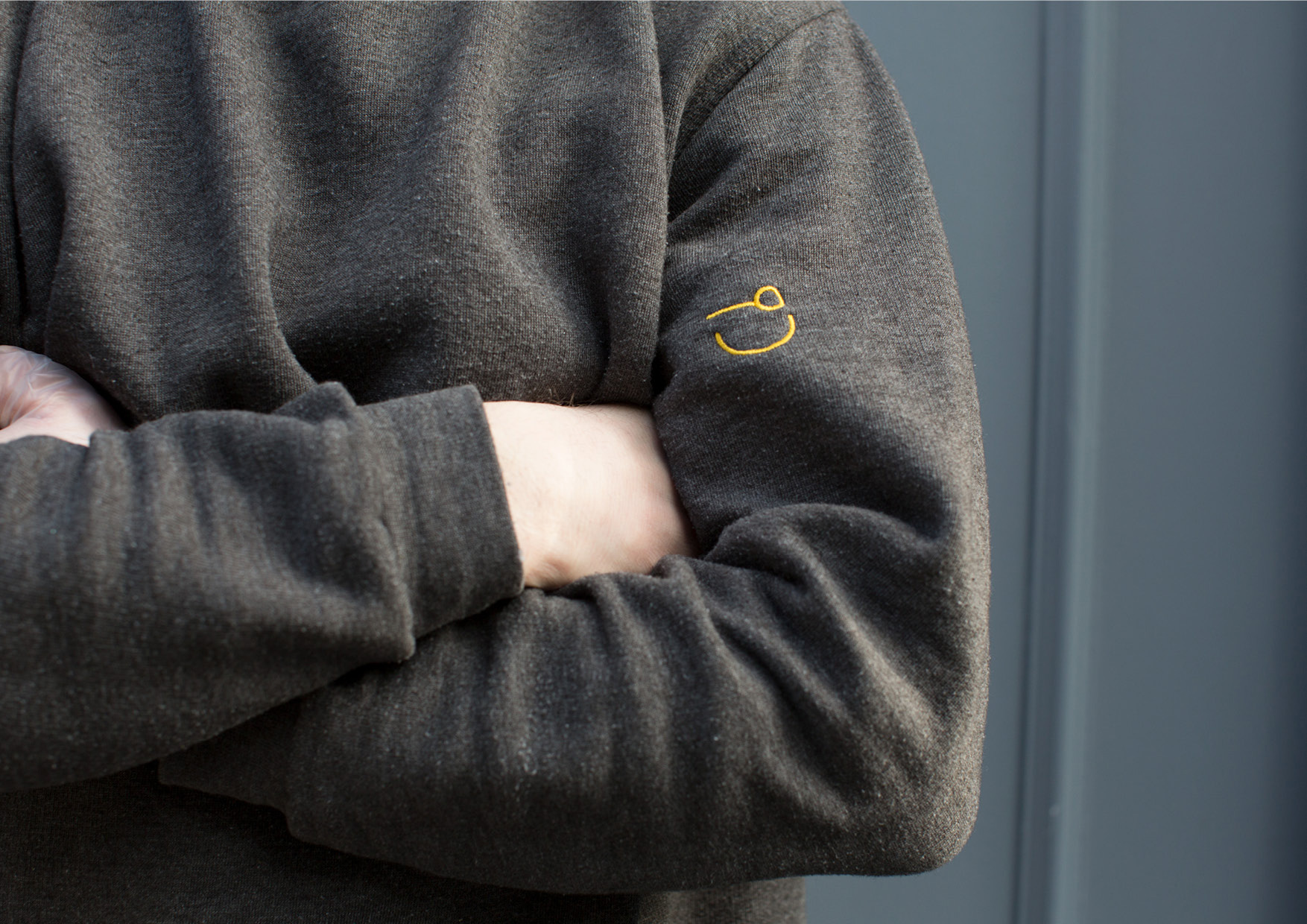
Simple geometry reproduces at any size. That logo works embroidered on a sweater, printed on a sandwich bag, and etched into signage at 1cm tall. Complex mascots with fine details — crosshatching, gradient shadows, delicate line weights — collapse at small sizes, forcing you to maintain multiple versions of your logo.
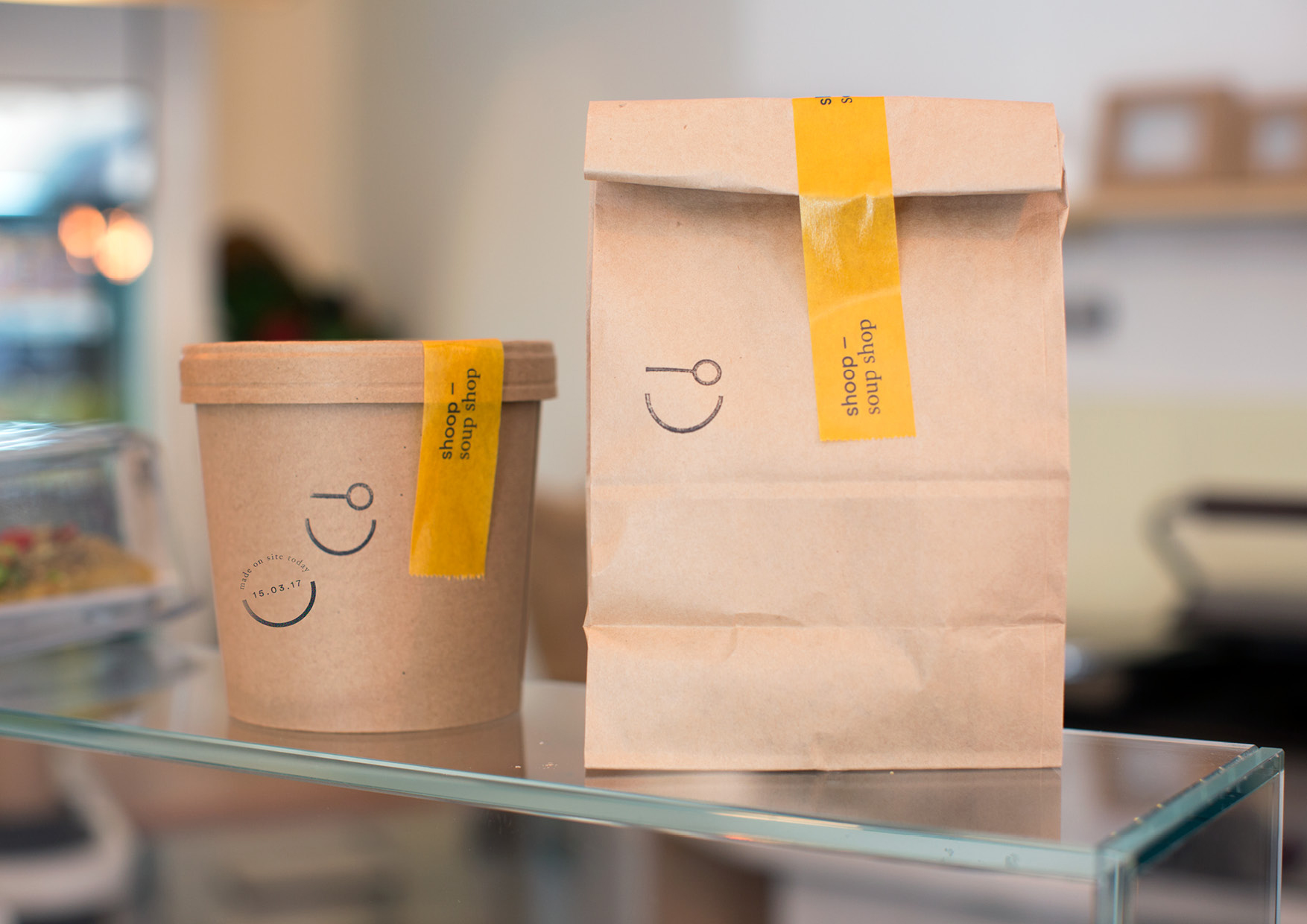
The construction principle to follow: build your symbol using only the shapes available in a basic vector toolkit — circles, rectangles, ellipses, and Bézier curves with no more than 3-4 anchor points per segment. If you need more anchor points to draw something, you're adding complexity that will cost you later.
The Sans + Serif Pairing Logic
Lizzie Frost explicitly chose Circular Std (sans-serif) alongside Kings Caslon Typo (serif). This pairing isn't random — it's a contrast system that creates visual hierarchy and emotional depth simultaneously.
Here's the logic behind effective serif/sans pairing:
- The sans-serif carries the brand name — it's clean, modern, easy to read at a glance. Circular Std is a geometric sans, meaning its letterforms are constructed from circles and straight lines. This mirrors the geometric construction of the symbol itself.
- The serif handles supporting text — taglines, category descriptors, secondary information. Serifs carry warmth and tradition, traits that reinforce the "homemade from seasonal ingredients" positioning.
When the symbol is geometric, pair it with a geometric sans for the primary wordmark. When the symbol has organic curves or hand-drawn qualities, a humanist sans (like Gill Sans or Aktiv Grotesk) tends to harmonize better.
The mistake most people make is picking fonts they like independently, rather than fonts that share underlying geometric DNA.
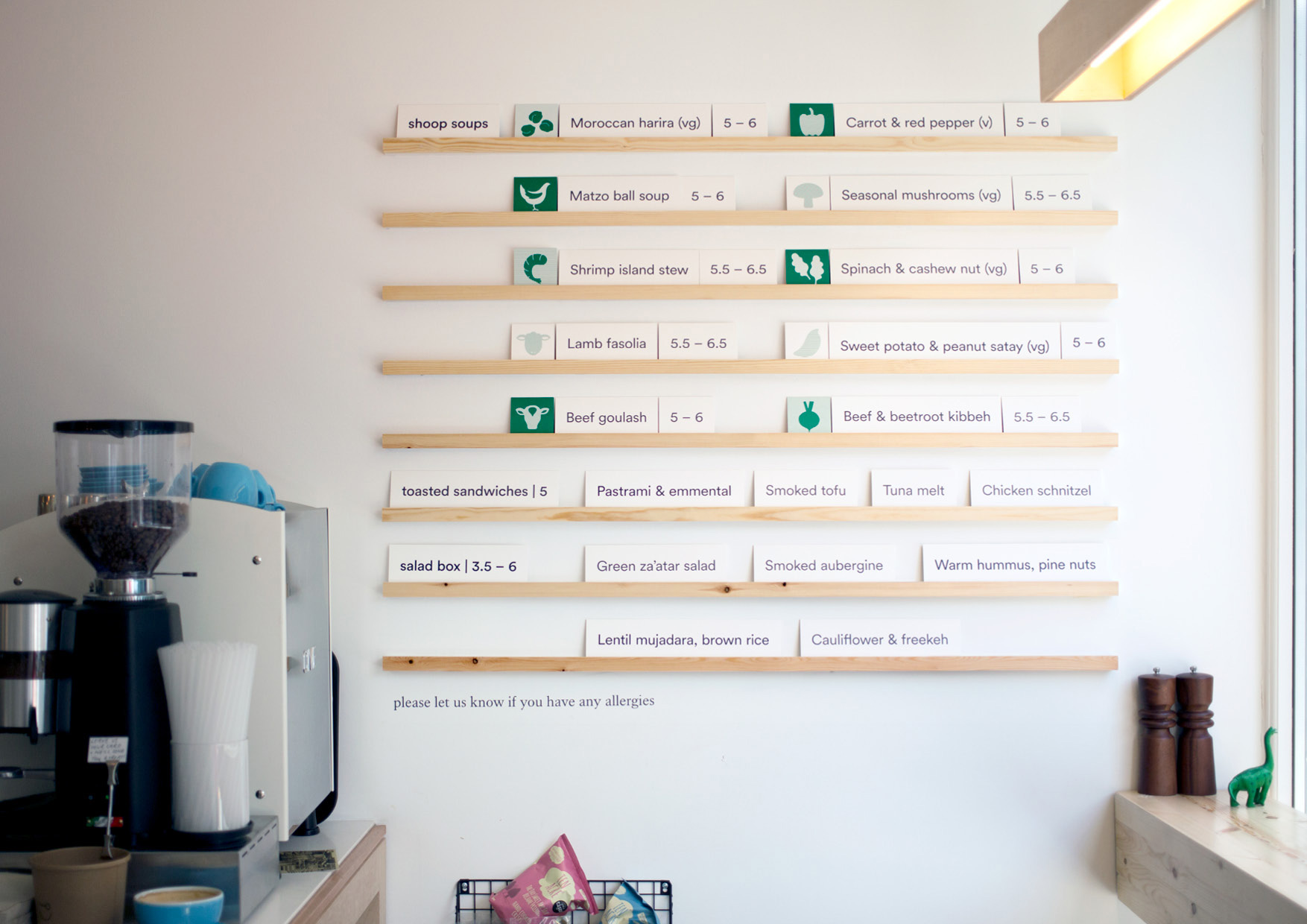
Visual Balance: What Goes Wrong When It's Off
The original article makes an important observation: the version shown on the brand's own website lacks the visual balance of Lizzie's original work. This is a common problem when logos get adapted by non-designers — and it reveals something important about what balance actually means.
Visual balance in a logo isn't about equal distribution of weight. It's about optical weight — how heavy each element feels to the eye, which doesn't always correspond to physical size.
A bold symbol needs a wordmark with enough weight to anchor it. If you scale down the wordmark to give the symbol more room, you unbalance the whole composition. The symbol starts floating, unmoored.
The fixes are usually small:
- Adjust tracking (letter-spacing) on the wordmark to increase its visual footprint without changing font size
- Shift the baseline relationship between symbol and text
- Increase or decrease the symbol's stroke weight by 5-10% to match the wordmark's visual density
The test: shrink your logo to 32px wide (favicon size) and look at it. If the symbol disappears and only text remains, or vice versa, you have a balance problem.
Color Warmth: What Makes a Palette Feel Like Food
The Shoop palette leans into warm neutrals — creams, off-whites, warm blacks. No electric blue, no clinical white, no neon accents. This is intentional color temperature management.
Color temperature in logo design works on a simple axis: warm colors (reds, oranges, yellows, warm neutrals) trigger appetite and comfort associations. Cool colors (blues, greens, clean whites) suggest cleanliness, technology, or efficiency.
For food and hospitality, the goal is usually warmth with enough contrast to be legible. The technique:
- Choose a warm neutral (cream, sand, warm gray) as your primary background
- Use warm black (a very dark brown or dark warm gray, not pure #000000) for text
- Add a single accent in the warm spectrum — amber, rust, terracotta — for emphasis
Avoid pure white and pure black in food branding. Both feel clinical. Pure white reads as sterile; pure black reads as either luxury or threat, depending on context. A 5% warm tint on your whites makes everything feel more inviting.
The Logo as the Entire System
Most branding advice pushes toward complex design systems — color libraries, pattern libraries, illustration styles, motion guidelines. Shoop is a useful counterexample.
For small businesses, the logo itself can be the design system. When a symbol is strong enough, it carries packaging, signage, merchandise, and social media on its own. The winking spoon on a paper bag, a receipt, a sweater — it works every time because the mark itself contains all the personality the brand needs.
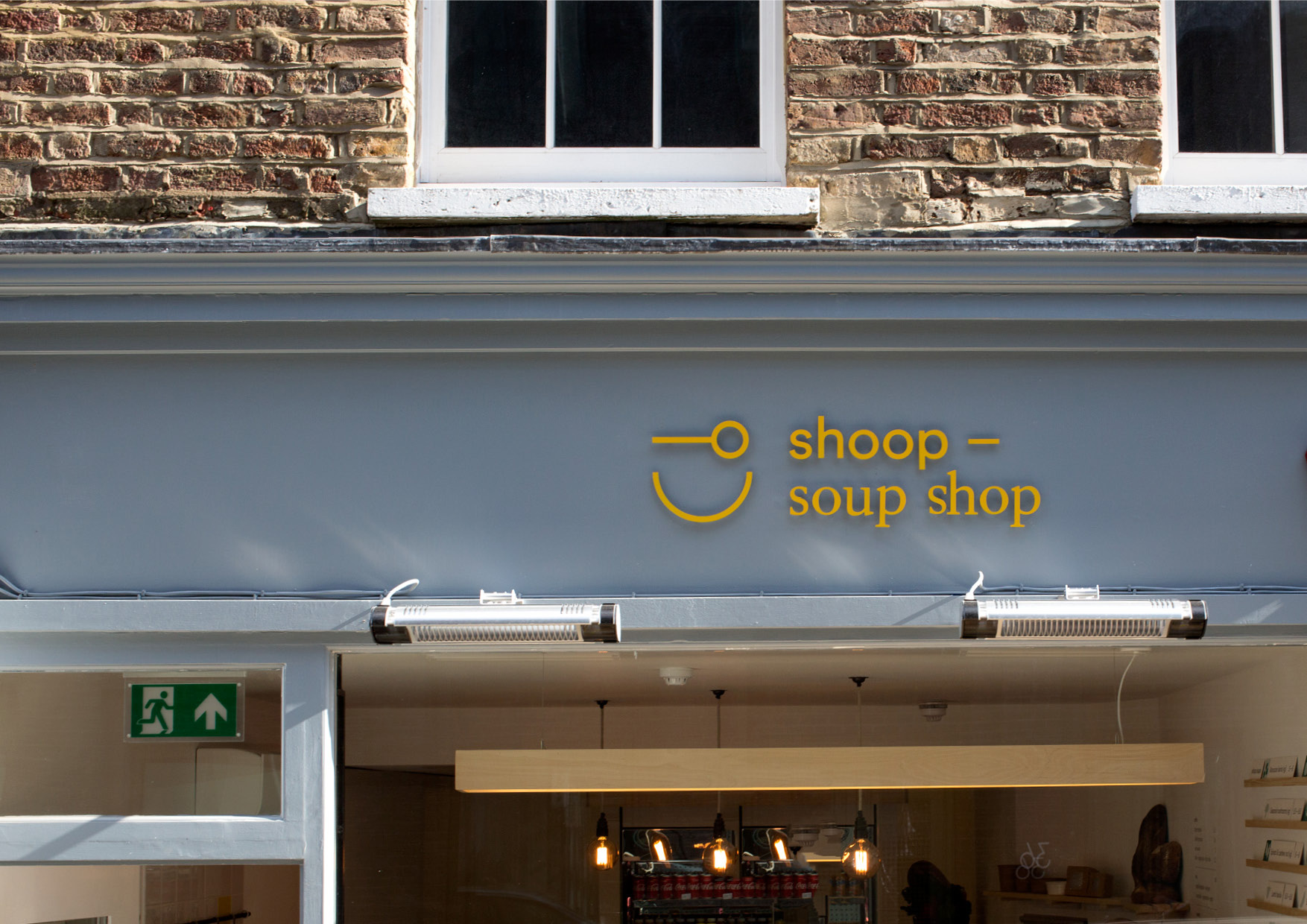
This is actually a harder design challenge than building a complex system. A comprehensive system can hide a weak logo behind a lot of visual noise. A single strong mark has nowhere to hide. Every design decision is visible and permanent.
The checklist for a self-sufficient logo:
- Does it work in one color?
- Does it work reversed (white on dark)?
- Does it work at 16px and at 1000px?
- Can it be embroidered, engraved, and screen-printed without modification?
- Does it communicate the brand's personality without any supporting text?
If the answer to all five is yes, you have a logo that can serve as an entire system.
What SMB Owners Should Take From This
If you're commissioning or designing a logo for a small business competing against established chains, the Shoop example offers a clear strategic direction:
Lead with personality, not category clichés. Every soup restaurant has steam rising from a bowl. A winking spoon is memorable. The risk of "too weird" is almost always overstated — the real risk is being forgettable.
Invest in typography as much as the symbol. Half the logos that look "amateur" aren't failing because of the symbol — they're failing because the font is generic or poorly spaced. Circular Std paired with Kings Caslon Typo costs nothing to license but requires a designer who understands why those two fonts work together.
Protect the original. The observation that the brand's own website implementation lacks the original's balance isn't a small thing. Logos degrade through careless adaptation. Maintain a locked, approved version and enforce it.
A warm logo doesn't require a complex design system, a large budget, or a famous designer. It requires clarity of purpose, restraint in execution, and a genuine understanding of what feeling you're trying to create before anyone reads the brand name.