How to Design a Logo for a Complex Research Brand
Designing a logo for a scientific or institutional brand is one of the most demanding — and most rewarding — challenges in logo design. The brief is often complex, the name is long, and the audience expects both credibility and forward-thinking vision. In this case study, we break down the strategic and visual thinking behind designing a logo for a research network, using a real-world project as our guide.
Whether you're a small business owner commissioning a logo or a designer refining your craft, this process reveals how great logos are built from the inside out.
Start with Strategy, Not Sketches
The single most common mistake in logo design is jumping straight to visuals. Before touching a pencil or opening Illustrator, every professional logo project starts with a discovery phase.
For any brand — from a café to a research institution — you need to answer three foundational questions:
- What does the organization do, and why does it exist?
- Who is the target audience, and what do they value?
- How should it be perceived compared to competitors?
The answers to these questions become your design compass. Every visual decision — color, shape, typeface, symbol style — should be traceable back to these strategic goals.
For a research network bridging academia and industry in wearable technology, the logo needs to communicate: authority, innovation, collaboration, and accessibility. These aren't buzzwords — they are real constraints that eliminate certain design directions and validate others.
Defining Clear Project Goals
A well-written set of project goals is worth more than any mood board. Goals should describe what the logo must do, not just what it should look like.
Useful goal categories include:
- Functional goals — Where will the logo appear? (Website, print, merchandise, signage)
- Audience goals — Who must immediately trust this logo? (Academics, industry professionals, policymakers)
- Differentiation goals — What should make this logo stand out in its specific field?
- Communication goals — What ideas or values should the symbol convey at a glance?
Accessibility is a non-negotiable goal for any institutional or scientific brand. The logo must work at small sizes, in grayscale, and across different language contexts.
Choosing the Right Logo Format
Before exploring visual concepts, you need to decide what type of logo is appropriate. The main options are:
- Wordmark — Stylized text only (e.g., FedEx, Google)
- Lettermark — Initials only (e.g., IBM, HBO)
- Symbol + Wordmark — Icon paired with text (e.g., Apple, Nike with swoosh + name)
- Abstract mark — Non-representational shape
- Pictorial mark — Recognizable image or object
For organizations with long names, a symbol paired with a wordmark is almost always the right choice. The symbol gives the brand a standalone visual anchor — something that works on an icon, a pin, a screen — while the wordmark provides the full name when needed.
Lettermarks can be risky for multilingual or multi-country brands. If your audience spans different languages and alphabets, initials may not carry consistent meaning or pronunciation. A symbol is more universal.

The Sketchbook Stage: Getting the Right Idea First
Professional logo designers almost universally begin in a sketchbook — not because it's nostalgic, but because analog sketching forces conceptual thinking over visual polish.
When you sketch with a pen, you're forced to commit to ideas rather than endlessly tweaking colors and gradients in software. The goal at this stage is quantity and range, not refinement.
A useful framework: "Get the right idea, then get the idea right."
This means your first goal is conceptual accuracy — finding a visual metaphor that truly fits the brand's meaning. Refinement and aesthetics come later.
How to Generate Symbol Concepts
Start by asking: What does the core subject actually look like?
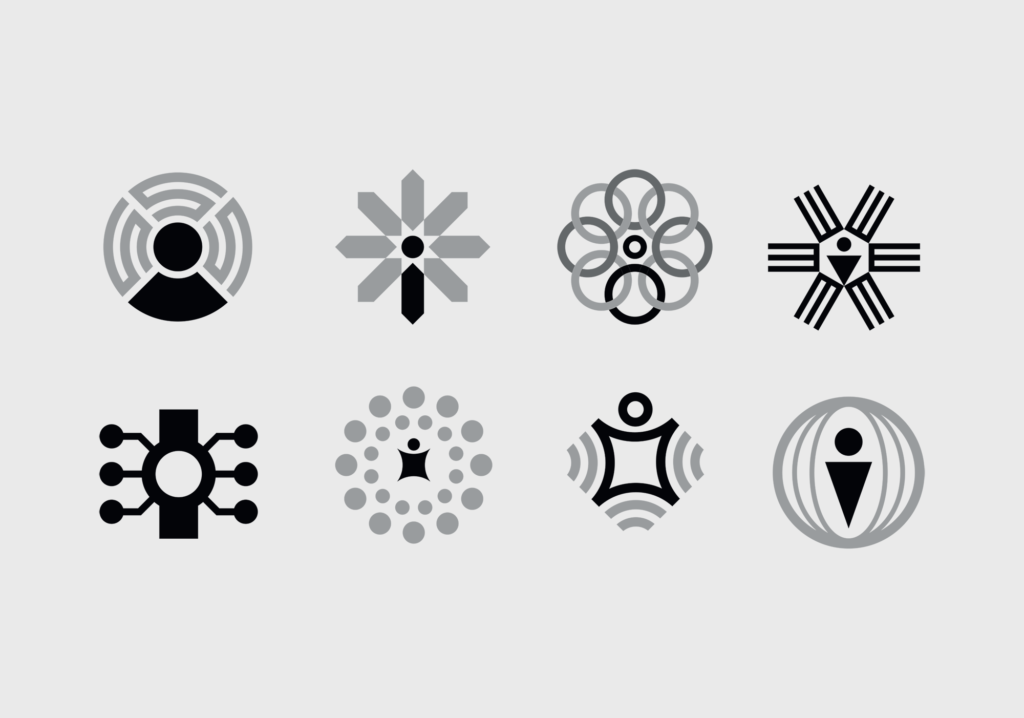
For a wearable biosensor network, the designer researched actual sensor hardware — what shapes appear? Circular electrodes, wave patterns, body silhouettes, connectivity lines. Each of these is a potential visual direction.
Then ask: What metaphors communicate the deeper meaning?
- A network suggests nodes and connections — dots and lines
- Wearable suggests wrapping, proximity to the body, flexibility
- Biosensing suggests signal waves, data pulses, monitoring rhythms
The best symbols sit at the intersection of literal and metaphorical — recognizable enough to make sense, abstract enough to be timeless.
Moving from Sketch to Vector
Once a handful of strong concepts emerge from the sketchbook, the designer moves to vector software to develop them further. This is where geometric construction becomes critical.
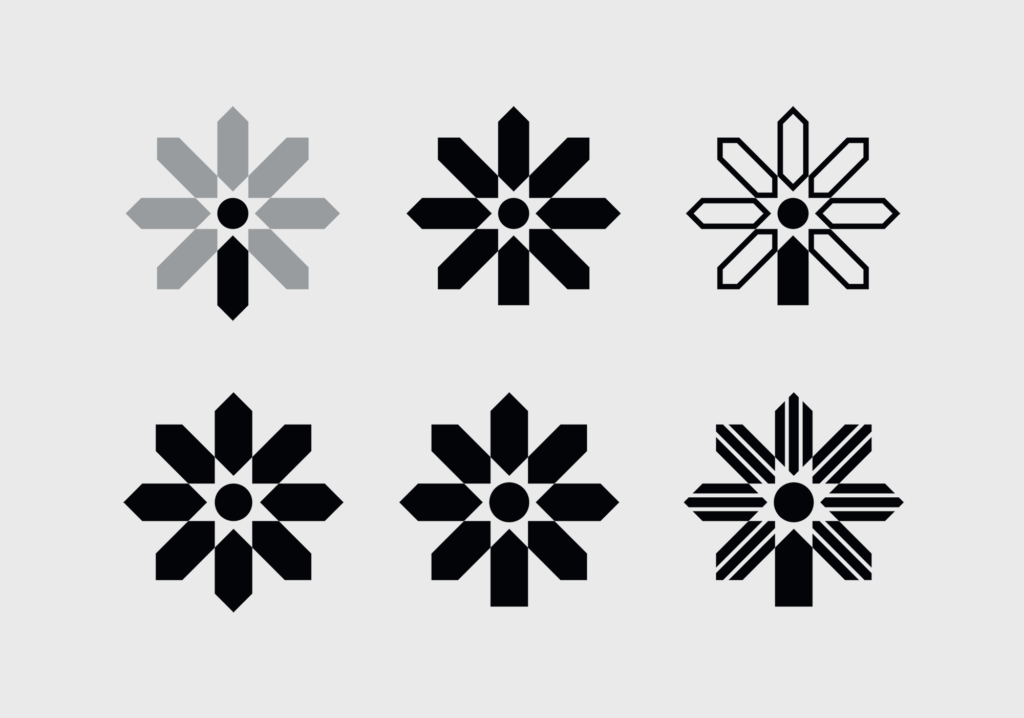
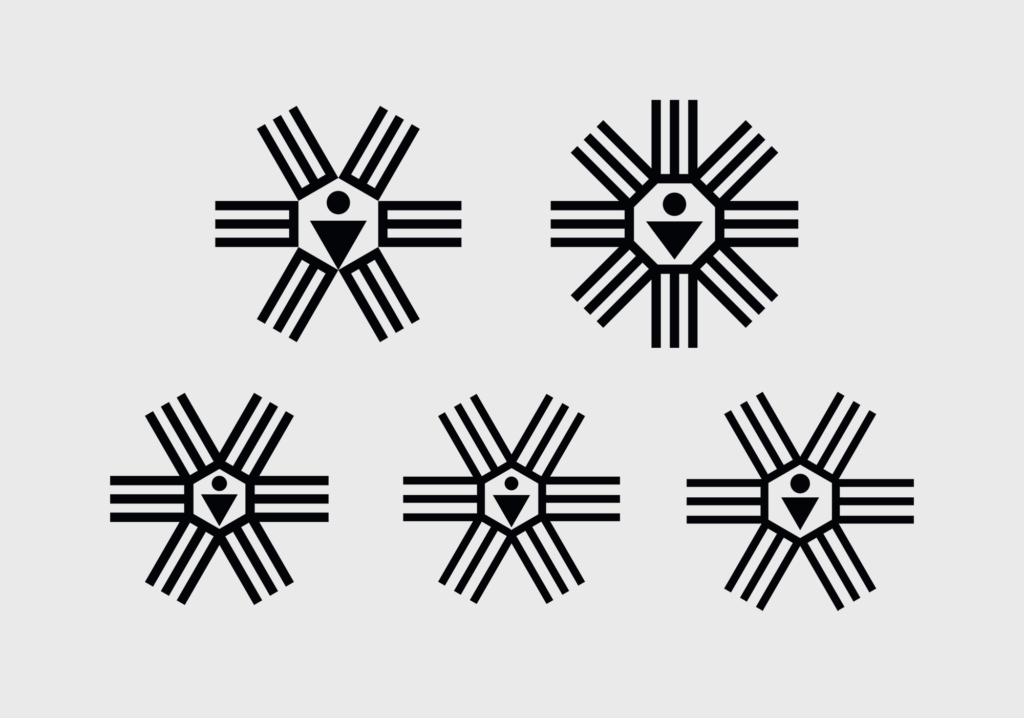
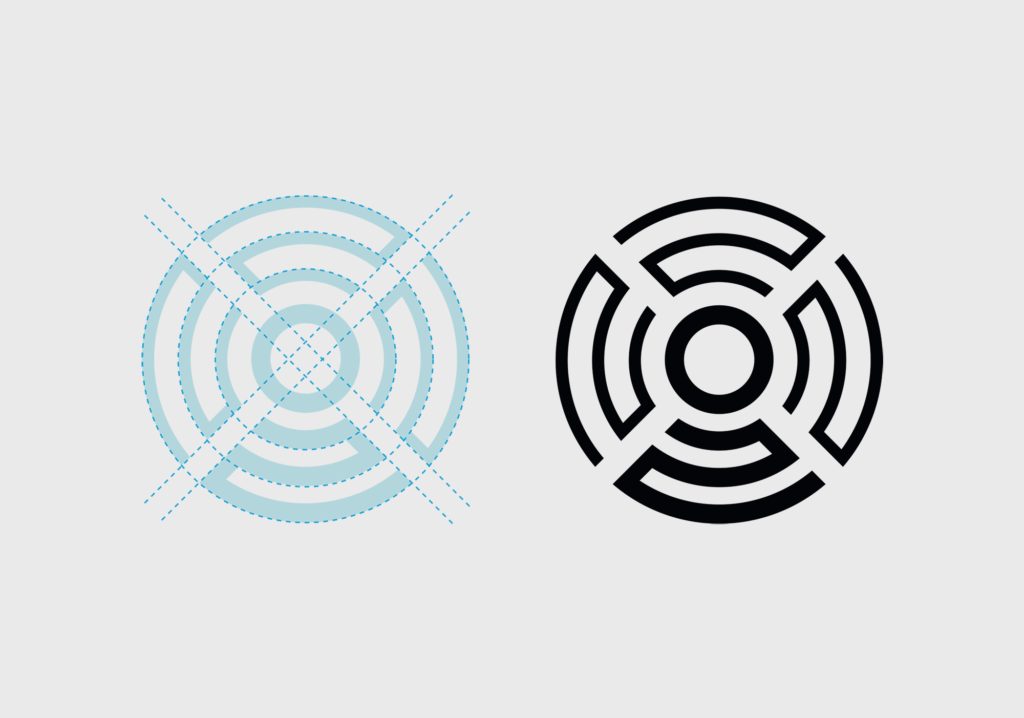
Good logo symbols are built on underlying geometry — circles, triangles, golden ratio proportions, grid systems. This isn't just aesthetics. It's what makes a logo feel balanced, intentional, and scalable.
Key techniques at this stage:
- Grid alignment — Anchor all elements to a consistent underlying grid so spacing feels deliberate
- Optical sizing — A circle and a square at the same mathematical width don't look the same size; optical adjustments make them feel equal
- Negative space — Some of the most memorable logos use the background as part of the design (think the arrow in FedEx, or the bear in the Toblerone mountain)
- Corner radius — Hard vs. soft corners dramatically change the personality of a mark; rounder corners feel approachable, sharp corners feel precise or aggressive
Color Strategy for Technical and Scientific Brands
Color selection for scientific or institutional logos follows different rules than consumer brands.
Blues and teals dominate the research and technology sector because they communicate trust, precision, and professionalism. If your brand needs to differentiate from competitors, consider whether an unexpected color accent can set you apart while still maintaining credibility.
Some practical principles:
- Limit to 2 colors maximum for a scalable logo — one dominant, one accent
- Test in grayscale early — if the logo doesn't work in black and white, it's not ready
- Consider color blindness — approximately 8% of men have some form of color blindness; avoid relying on red/green contrast alone to communicate information
- Check contrast ratios — for logos that appear on backgrounds of different colors, your palette needs sufficient contrast at both ends
For networks with a European focus, there's often a subtle pull toward the blue of the EU flag — this can be used intentionally to signal European identity, or deliberately subverted to stand apart.
Typography Pairing for Institutional Logos
The wordmark — the typeset name — carries as much weight as the symbol. Typography choice signals brand personality immediately.
For research and scientific institutions:
- Sans-serif typefaces (like Helvetica, Inter, or custom geometric fonts) communicate modernity, clarity, and precision
- Serif typefaces convey heritage, authority, and academic tradition
- Hybrid approaches — pairing a geometric sans with a slightly warmer secondary font — can balance innovation with trustworthiness
Avoid default system fonts. Even subtle customizations — adjusted letter-spacing, modified terminals, custom ligatures — distinguish a professional logo from a template.
For long organization names, hierarchy within the wordmark matters enormously. Consider whether acronyms, line breaks, or weight variation can help readers parse the name without sacrificing elegance.
Testing Versatility Across Applications
A logo isn't finished when it looks good on a white background at 500px. Versatility testing is a critical final step that many designers skip.
Test your logo across:
- Size range — Does it hold detail at 16px favicon size? Does it stay balanced at billboard scale?
- Background colors — Does it work on dark backgrounds, colored backgrounds, photographic backgrounds?
- Single color — Can it be embroidered, screen-printed, or stamped in one color?
- Reversed (white on dark) — Many applications require a white version; ensure strokes don't disappear
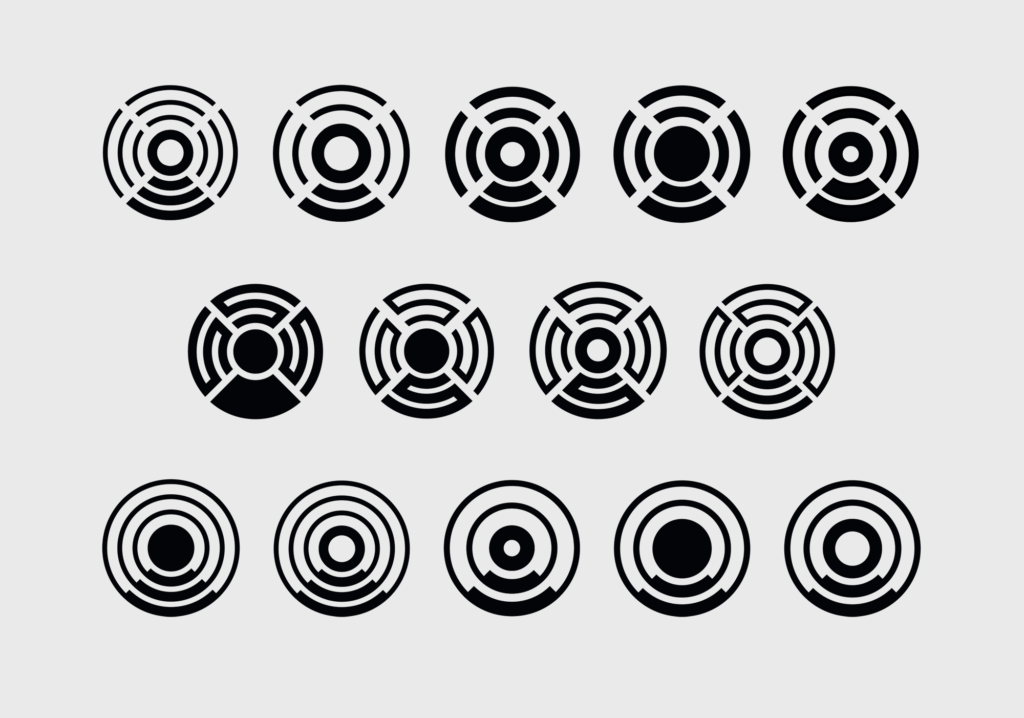
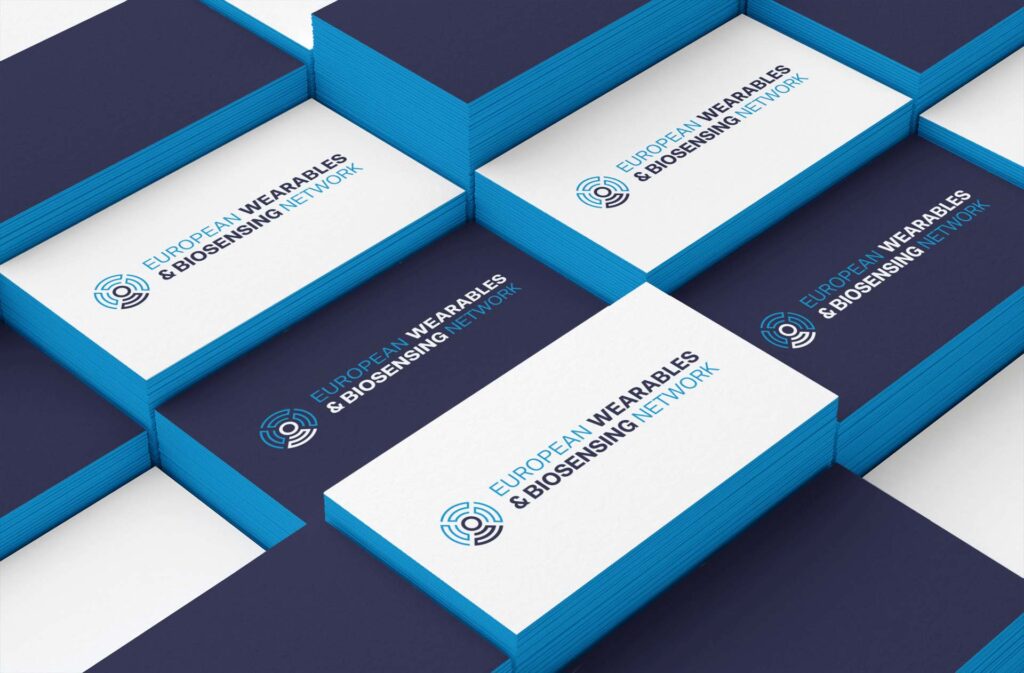
For research networks specifically, test the logo on: conference banners, email signatures, presentation slides, merchandise, and website headers. Each context reveals potential weaknesses that a static presentation file won't catch.
The Takeaway for SMB Owners
You don't need to be a research institution to benefit from this process. Every business, no matter its size, deserves a logo built on strategic thinking.
Before briefing a designer — or using an AI logo tool — write down your own project goals. Describe your audience, your competition, and the three words you want people to feel when they see your brand. That foundation is what separates a logo that lasts from one you'll want to replace in two years.
The best logos aren't the most complex. They're the ones where every visual decision has a reason — and that reason connects back to who the brand really is.