Logo Design Trends 2024: What They Teach You
Every year, designers scrutinize thousands of logos to identify the directions the industry is heading. The 2024 Logo Trend Report does exactly that—but rather than treating it as a style menu to copy from, smart designers use it as a lens to understand why certain visual approaches are gaining traction and what underlying techniques make them work.
Here's a breakdown of the major 2024 trends and, more importantly, the design mechanics you can apply to your own logo work.
Flat Box: Geometric Containment Done Right
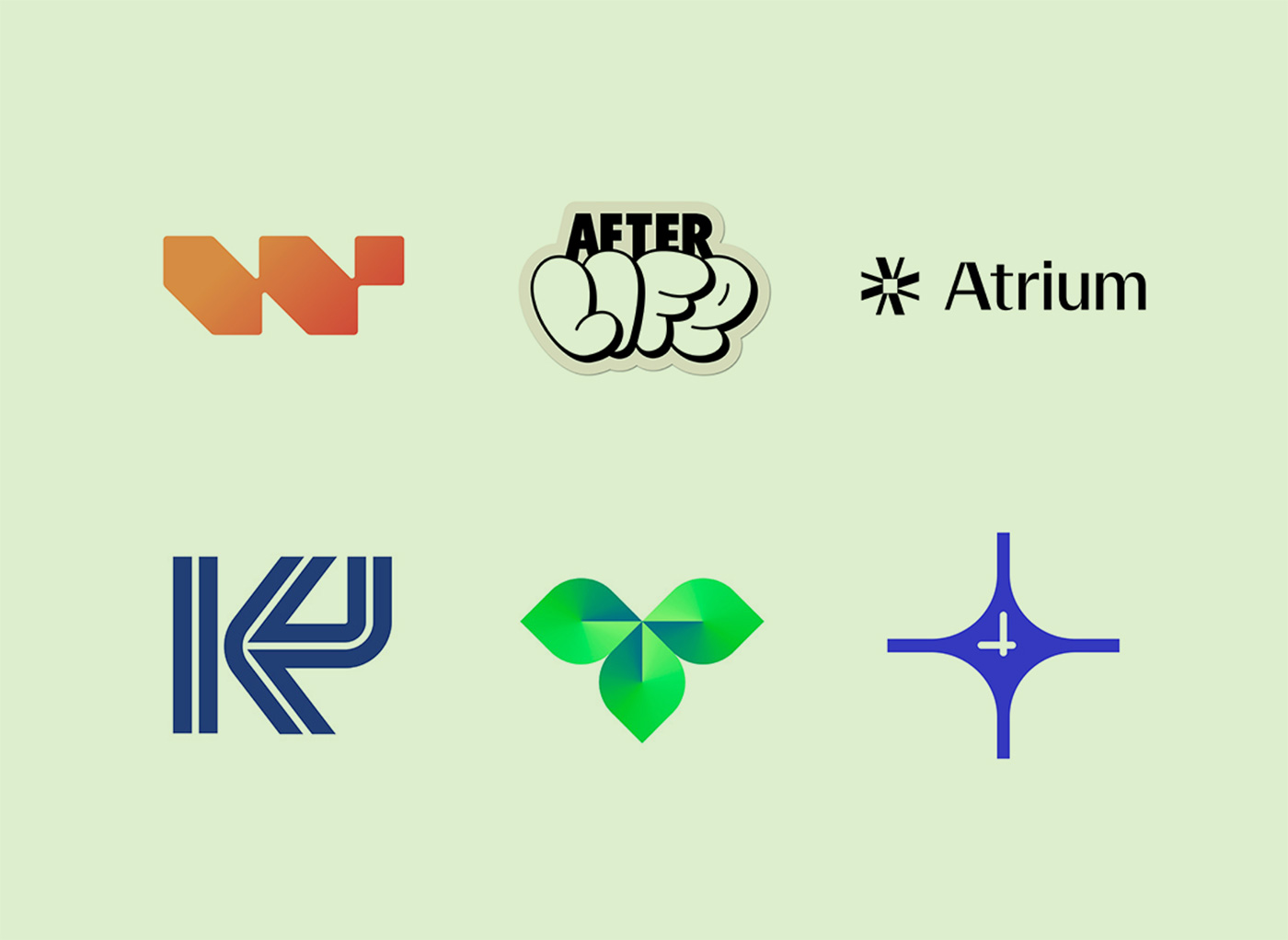
The "Flat Box" trend clusters mark elements inside clean rectangular or square frames. But calling it "flat" undersells what's actually happening technically.
The core technique is optical containment—using a bounding shape to force the eye inward before letting the inner mark breathe. When you design with this approach:
- Keep the inner mark at roughly 60–70% of the container's width. Tighter feels claustrophobic; looser loses the containment tension.
- Use stroke weight consistency: if your container has a 2pt border, your inner elements should share that same weight or be clearly heavier (anchor) or lighter (detail). Mixing unrelated stroke weights makes the composition feel accidental.
- Flat color blocking without gradients signals intentional modernism. Every additional tonal value you introduce adds visual complexity—budget those carefully.
For SMB owners, the practical takeaway: a contained logo format reproduces predictably across every application. Stamps, embossed stationery, embroidery patches—containment shapes protect your mark's legibility at any size.
Radar Sweep: Rotational Geometry and Arc Construction
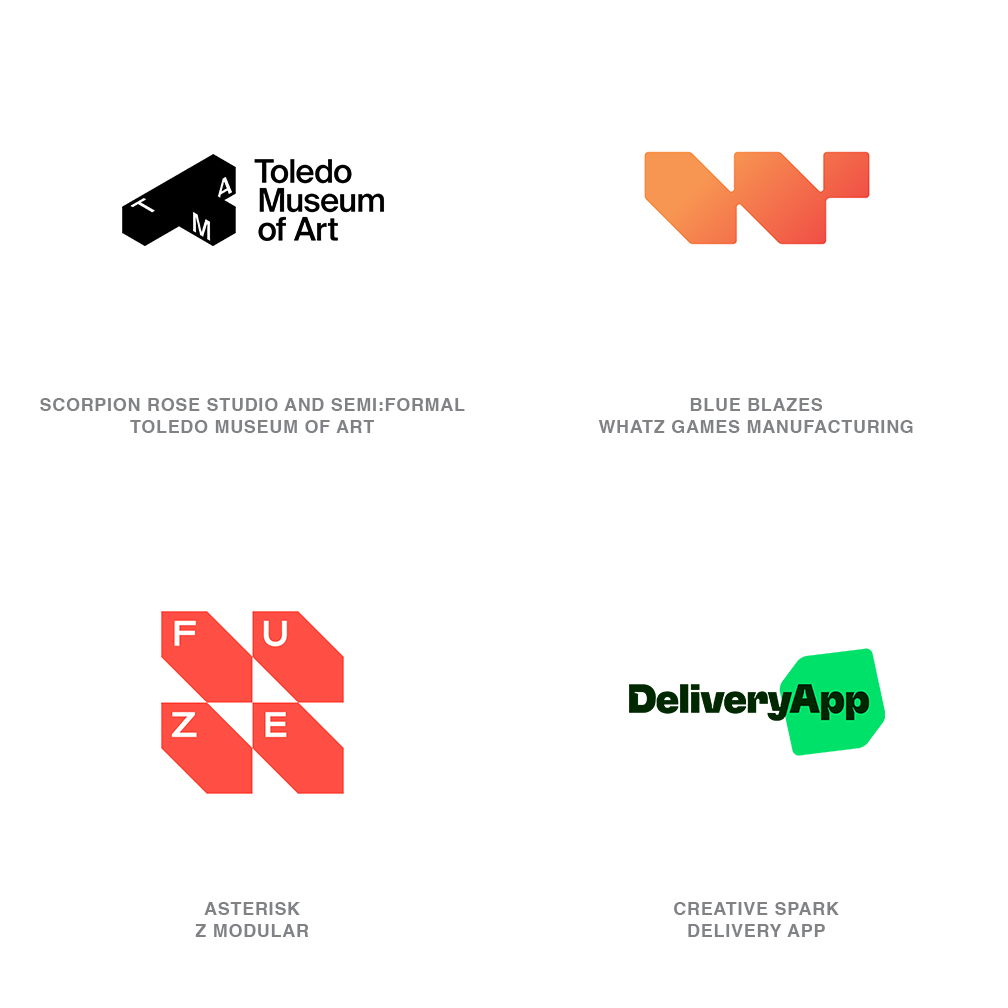
The "Radar Sweep" category features logos built on circular arc segments—partial rings, sweep paths, radial lines emanating from a center point. This is fundamentally a compass-and-grid construction problem.
The technique that separates refined radar logos from clumsy ones:
Use a consistent angular unit. Pick a base angle—say 30°—and build every arc, gap, and sweep as a multiple of that unit. A 60° sweep paired with a 30° gap creates visual rhythm because the proportions are mathematically related. Arbitrary angles create compositions that feel unsettled without viewers knowing why.
Negative space as signal. In radar-style marks, the white gaps carry as much meaning as the filled arcs. A common mistake is treating gaps as leftover space rather than designed intervals. Try building your gaps first, then fill what remains—this inverts the process and forces you to treat the negative space as a deliberate element.
Color temperature and energy direction. Cooler blues and teals reinforce the technological, scanning-motion association. Warmer sweeps—amber, orange—suggest urgency or momentum. Match color temperature to the actual industry context, not just what looks contemporary.
Passages: Depth Through Layered Planes
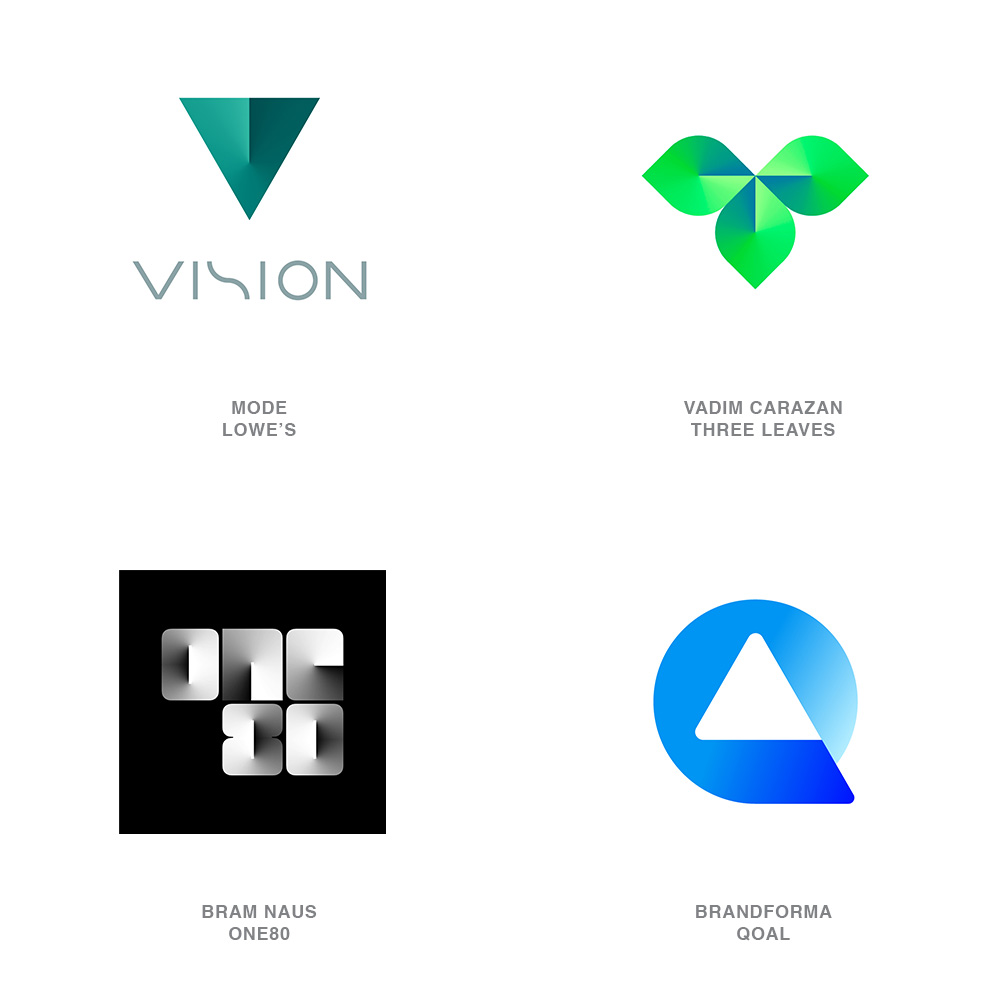
"Passages" logos create a sense of depth—pathways, doorways, tunnels, layered planes that imply you could move through the mark. The visual trick here is controlled perspective or overlap sequencing.
Two techniques drive this effect:
Staggered opacity or value steps. Rather than using a single foreground color, use 3–4 tonal steps from light to dark (or vice versa) to simulate receding planes. The eye reads darker values as further away when the surrounding context is light, and reads lighter values as receding when the field is dark. You don't need gradients—discrete tonal steps are cleaner and reproduce better.
Consistent vanishing cues. If your mark implies perspective, commit to it. Every edge that suggests depth should angle toward the same implied vanishing point. Inconsistent perspective cues—where different elements appear to recede in different directions—create subliminal unease. Use a light construction grid to align your depth cues before finalizing.
For logo applications, this trend works particularly well for brands in architecture, real estate, interior design, or tech infrastructure—industries where the idea of a pathway or entry point has direct conceptual resonance.
Bell Bottoms: Organic Flare and Weight Distribution
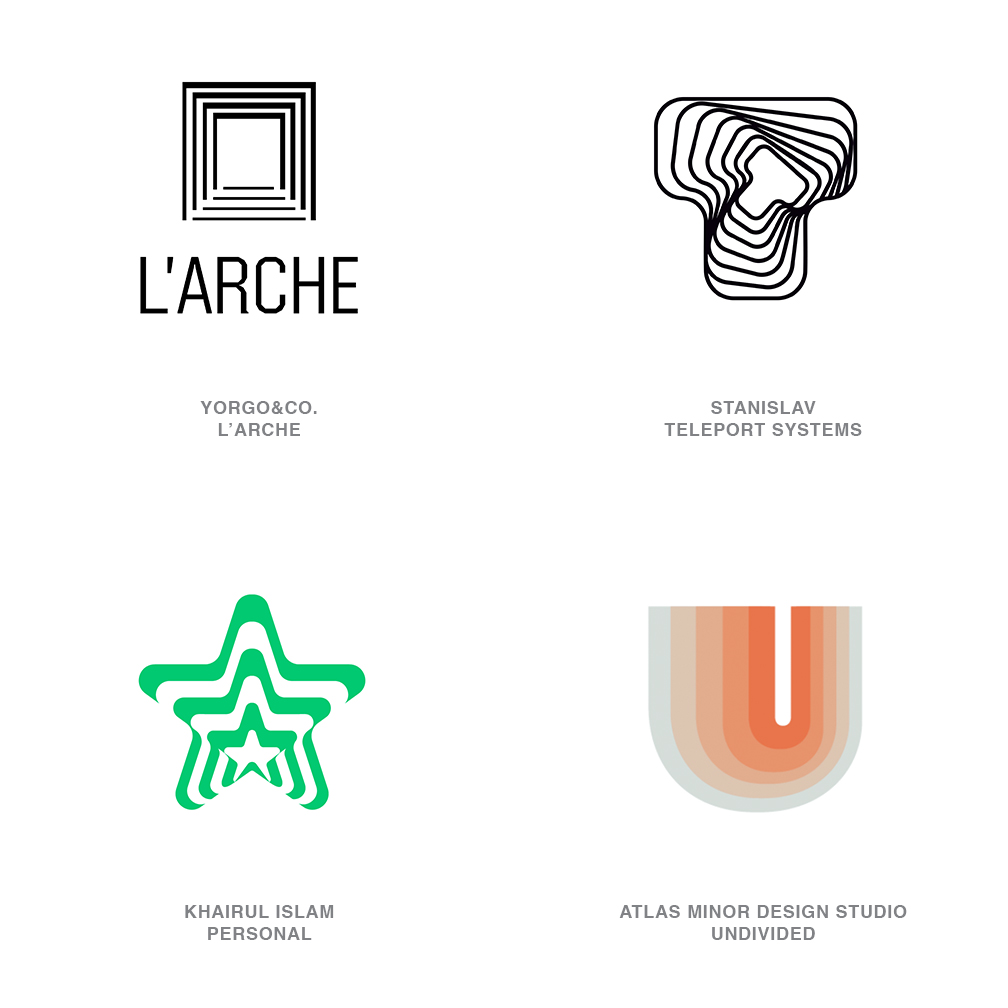
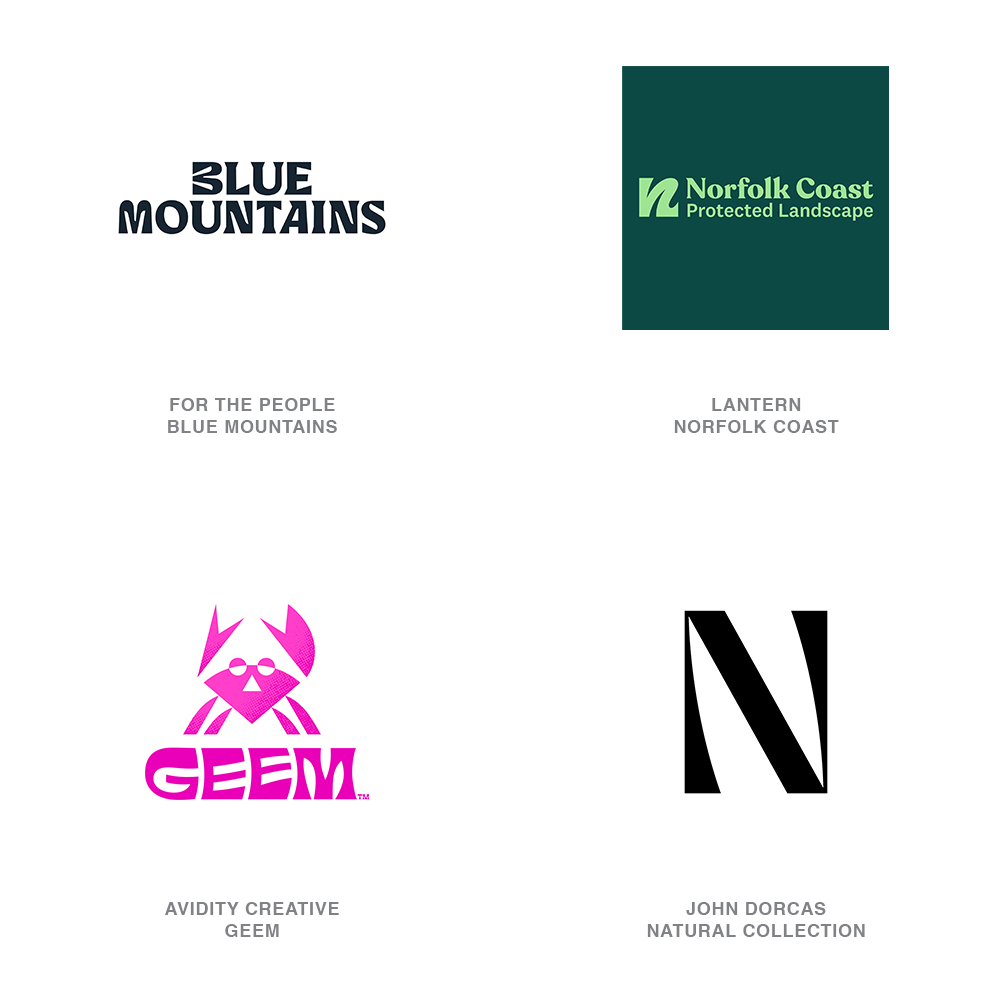
The "Bell Bottoms" trend features letterforms or shapes that flare outward toward the bottom—exaggerated stroke terminals, widening bases, retro geometric expansion. The design lesson here is about optical weight distribution.
Bottom-heavy compositions feel grounded. A mark that widens toward its base has visual stability—it mirrors how physical objects sit on surfaces. Marks that taper toward the bottom can feel precarious, which is sometimes intentional (implying dynamism) but risky for brands that need to project stability or permanence.
Terminal design is a brand decision. The flared terminal—the end of a stroke—is one of the most character-defining elements of a letterform or logomark. Straight cuts feel modern and neutral. Round terminals feel approachable. Flared or bracketed terminals (like the Bell Bottoms trend) feel deliberate, retro, and confident. When customizing type for a logo, the terminal is often the first element to modify.
Type and mark weight coordination. If your logomark uses bell-bottom flaring, your accompanying wordmark needs to carry corresponding weight. A heavy, flared symbol paired with a thin sans-serif wordmark creates visual discord. Look for connecting characteristics—shared weight, similar terminal personality, or compatible x-heights.
The Real Lesson: Trends vs. Trendy
Designer Paula Scher has a sharp framework for reading design history: if a style looks radical to you, you'll be doing it soon. If it looks nice, you're already doing it. If it looks tired, you did it five years ago. If it looks ugly, that's five years away.
This isn't cynicism—it's a useful calibration tool. The design movements in the 2024 report aren't telling you what to copy. They're showing you where collective visual taste is concentrating right now.
For your own logo work, the practical implication is this: understand the underlying technique, not just the surface aesthetic. Flat Box logos work because containment solves real reproduction problems. Radar Sweep logos work because rotational symmetry creates immediate recognizability. Passages logos work because depth cues engage the eye longer.
Any of these approaches can be applied badly—slapped on without understanding why the technique works. The designers making the strongest logos in any trend cycle are the ones who've internalized the geometric and optical principles underneath, then applied them to a specific client's context.
Applying This to Your Brand
If you're building or refreshing a logo for your business, use trend reports as a vocabulary guide, not a template list. Ask:
- Does the geometric approach match my industry's expectations? A radar sweep might be perfect for a cybersecurity firm and completely wrong for a bakery.
- Does the construction technique solve a real problem? Containment helps with reproduction. Depth cues help with memorability. Choose the technique that addresses your actual constraint.
- Is the style durable? The best logos carry a contemporary sensibility without being so tied to a single moment that they age out in three years. Use trend research to understand the direction, then find the version of that direction that has lasting visual logic.
The goal is never to follow a trend—it's to understand why certain visual ideas are gaining traction, then use that understanding to make something better.