What Edges Teach Us About Logo Design
Every logo is made of edges. Not shapes, not colors, not clever concepts — edges. The moment you draw a boundary between two areas, you've created visual form. Understanding this at a fundamental level will change how you design and evaluate logos.
The Edge Is the Logo
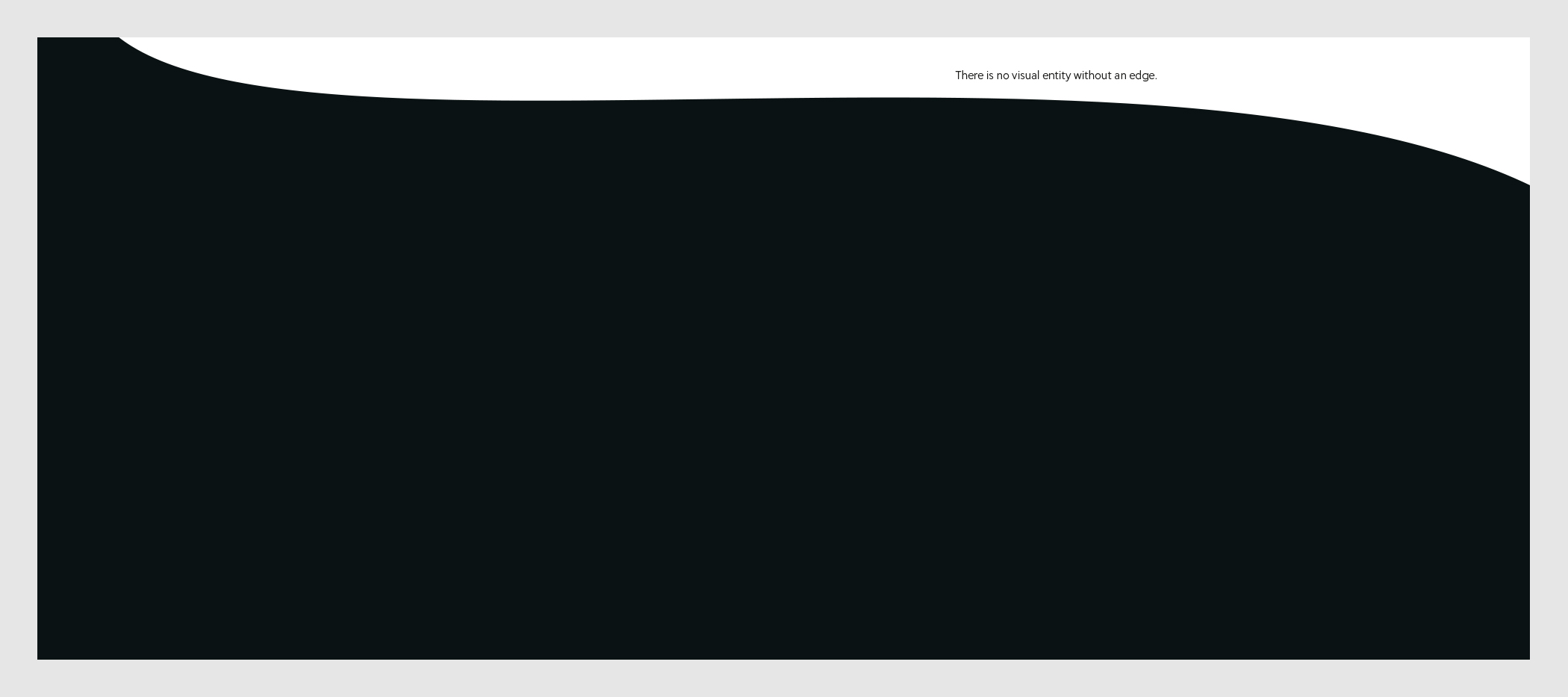
Before you think about brand personality or color palettes, consider this: a logo exists because of the contrast between one area and another. Remove the edge — the sharp transition between your mark and its background — and the logo disappears entirely.
This sounds obvious, but most designers treat it as a given and move on. Professionals obsess over it.
When you're refining a wordmark or icon, ask yourself: where exactly does this edge live? Is it crisp and intentional, or does it blur into ambiguity? A poorly defined edge reads as weakness — especially at small sizes, on textured backgrounds, or in single-color embroidery.
Practical test: Export your logo at 32×32px against a mid-gray background. If you can't read the form, your edges aren't working hard enough.
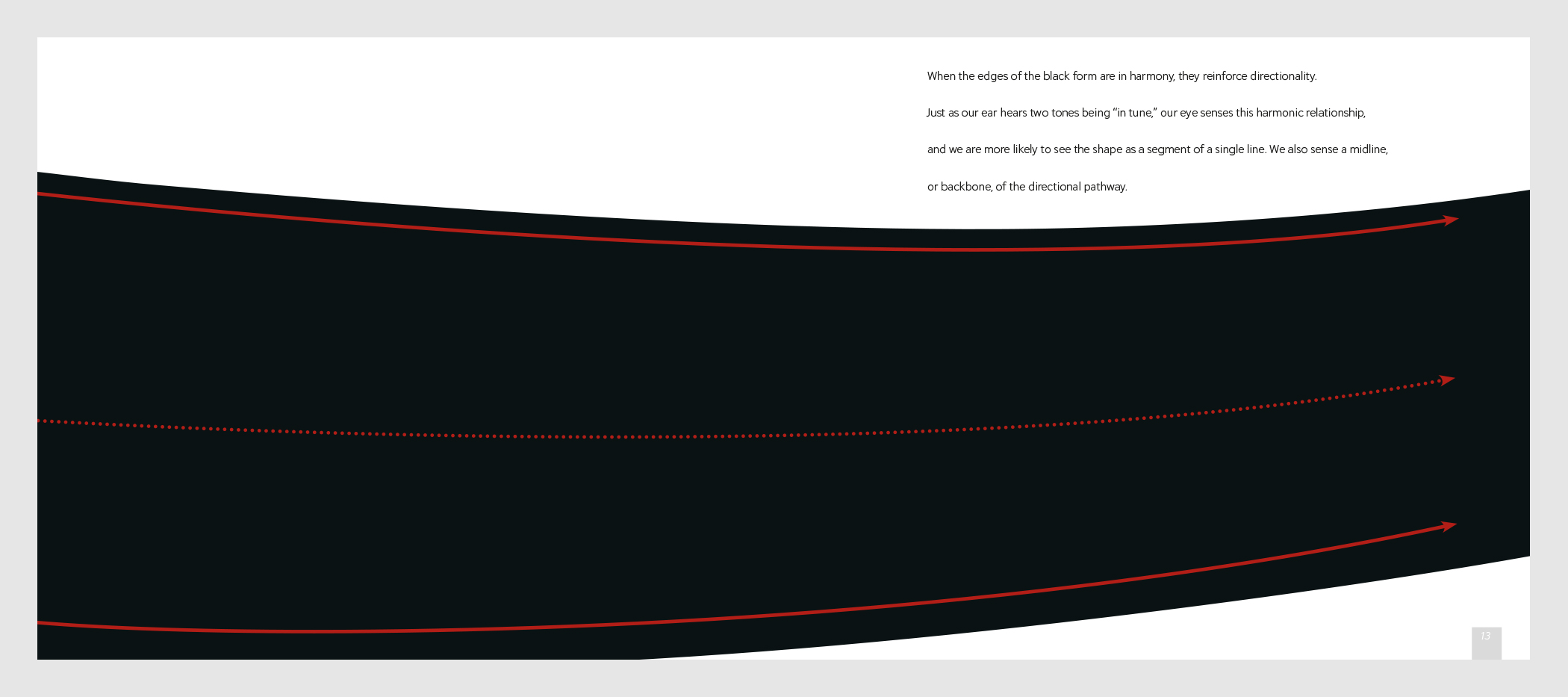
Harmony Between Edges Creates Perceived Direction
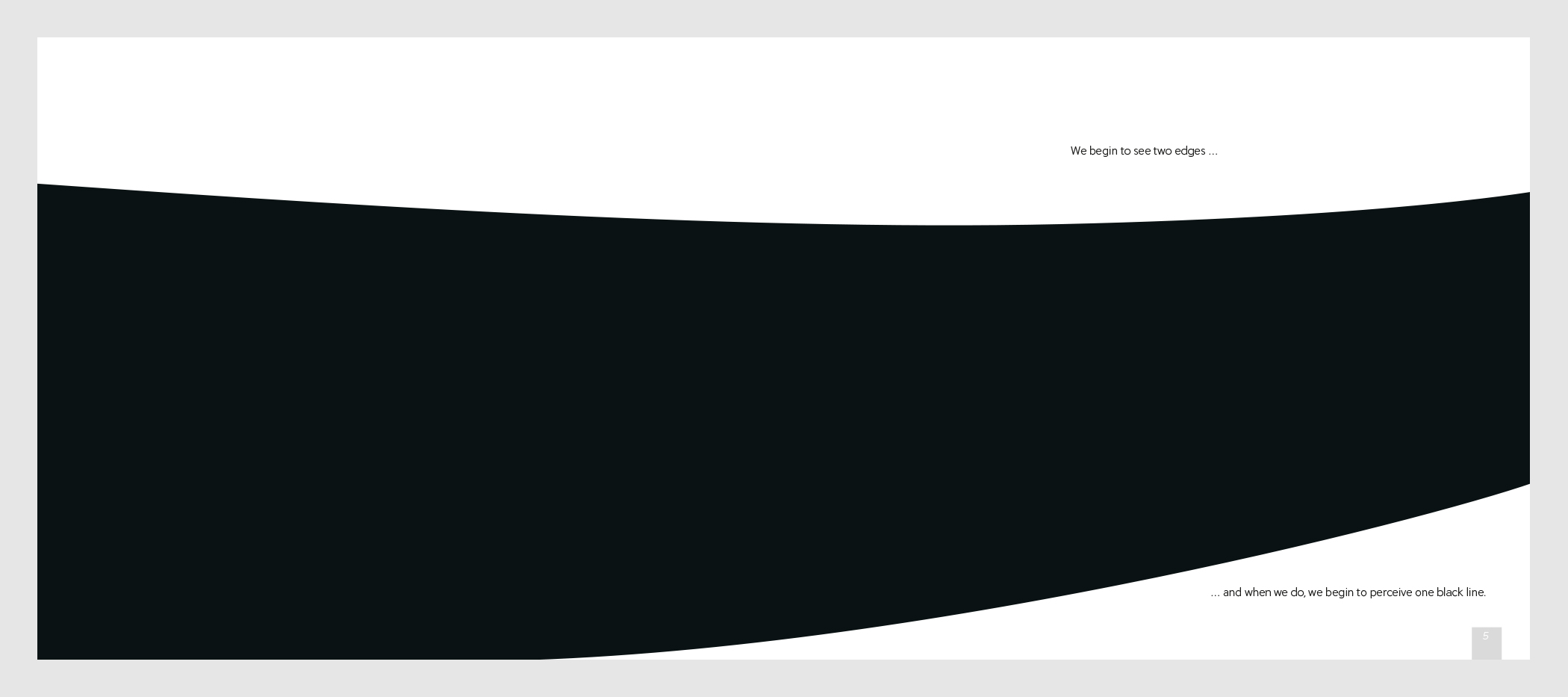
Two edges that work in concert create something the eye reads as a single, unified stroke. Two edges that fight each other fragment the form into competing objects.
In logo design, this translates directly to stroke consistency. When all the curves in your lettermark share the same rhythmic tension — when thick transitions to thin at the same optical angle throughout — the eye glides through the mark as one gesture. When stroke endings, terminals, and curves are designed without a unifying logic, the mark feels assembled rather than drawn.
The same principle applies to icon design. A leaf, an arrow, a geometric symbol: the top and bottom contours should reinforce each other's direction. When they do, the shape has momentum. When they don't, it sits flat.
Rule to internalize: Every edge in your logo should be in conversation with at least one other edge. If an edge is isolated and arbitrary, it's noise.
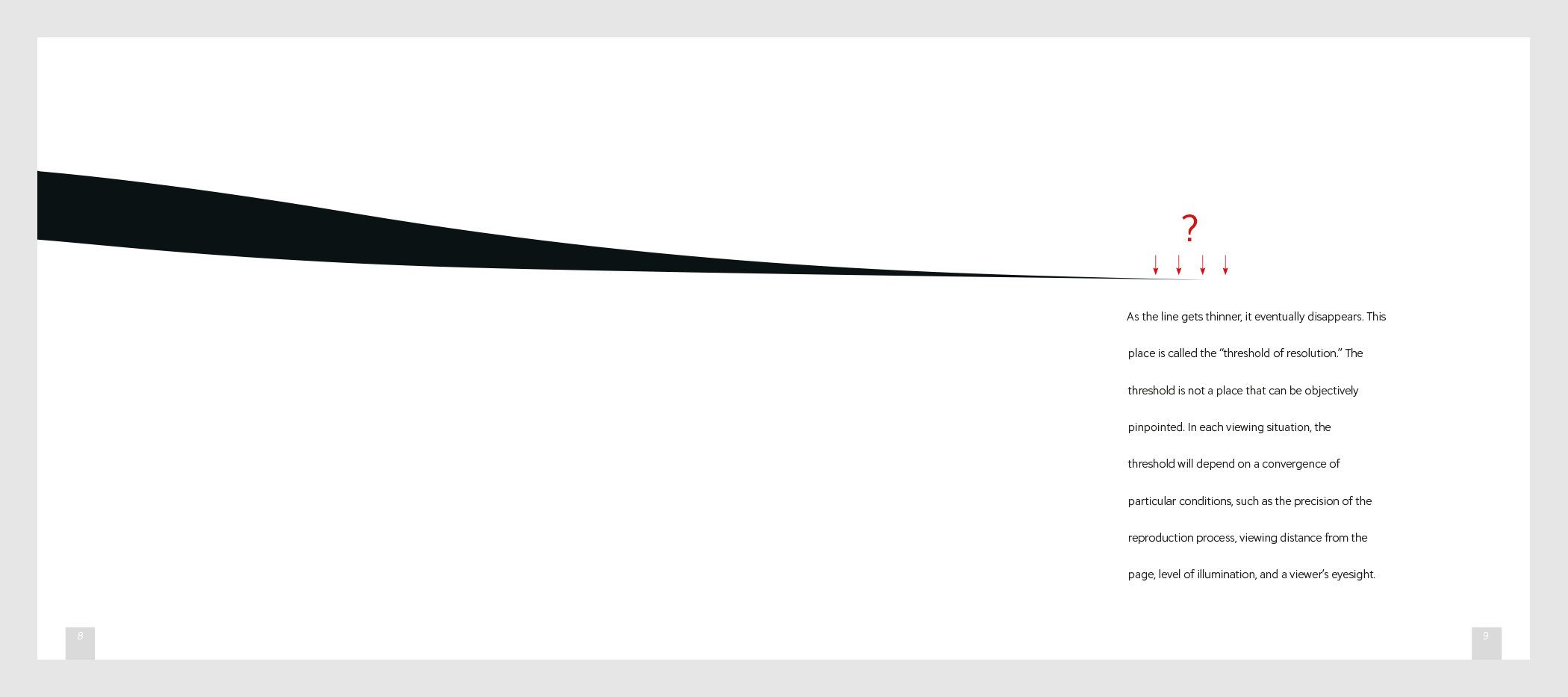
The Threshold Problem: Why Logos Fail at Small Sizes
There's a point at which a visual form disappears — where the line becomes too thin to read against its background. This isn't a technical limitation you can engineer around. It's a perceptual reality baked into human vision.
Every logo has a minimum viable size, and that size is determined by its thinnest edge. Hairline serifs, delicate cross-bars, and intricate counter shapes all erode before the main structure does. If your brand mark relies on fine details to communicate its meaning, you will hit the resolution threshold sooner than your client needs.
The practical implication: design your logo with the smallest intended use case in mind first. A favicon, an app icon, a 1cm business card emboss. If the core form survives at that scale, expand it. Don't design at full bleed and then try to shrink it down — the opposite direction always leads to compromise.
Logos built on geometric simplicity (think: clean circles, triangles, strong diagonals) have inherently lower thresholds. They remain legible at sizes where complex illustrative marks collapse entirely.
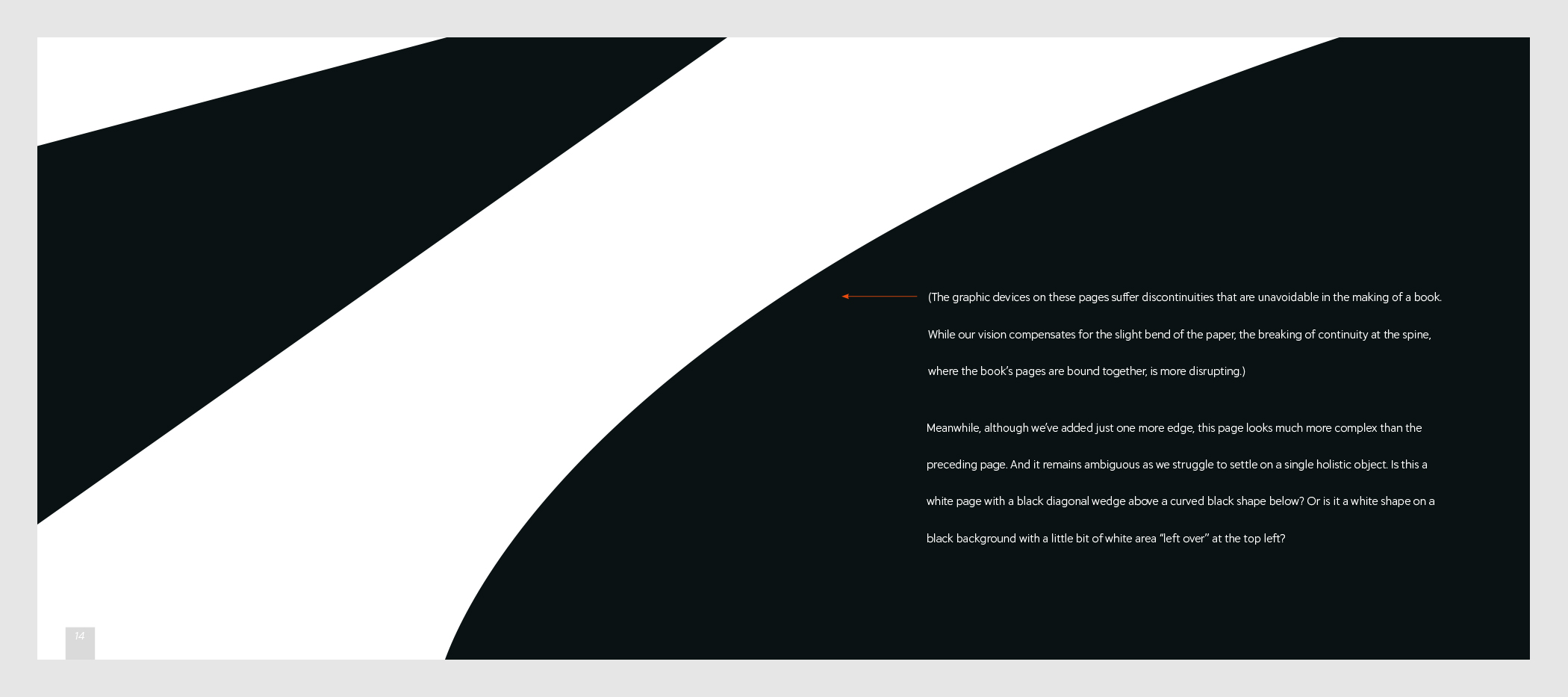
Gestalt: Why Some Logos Feel "Complete"
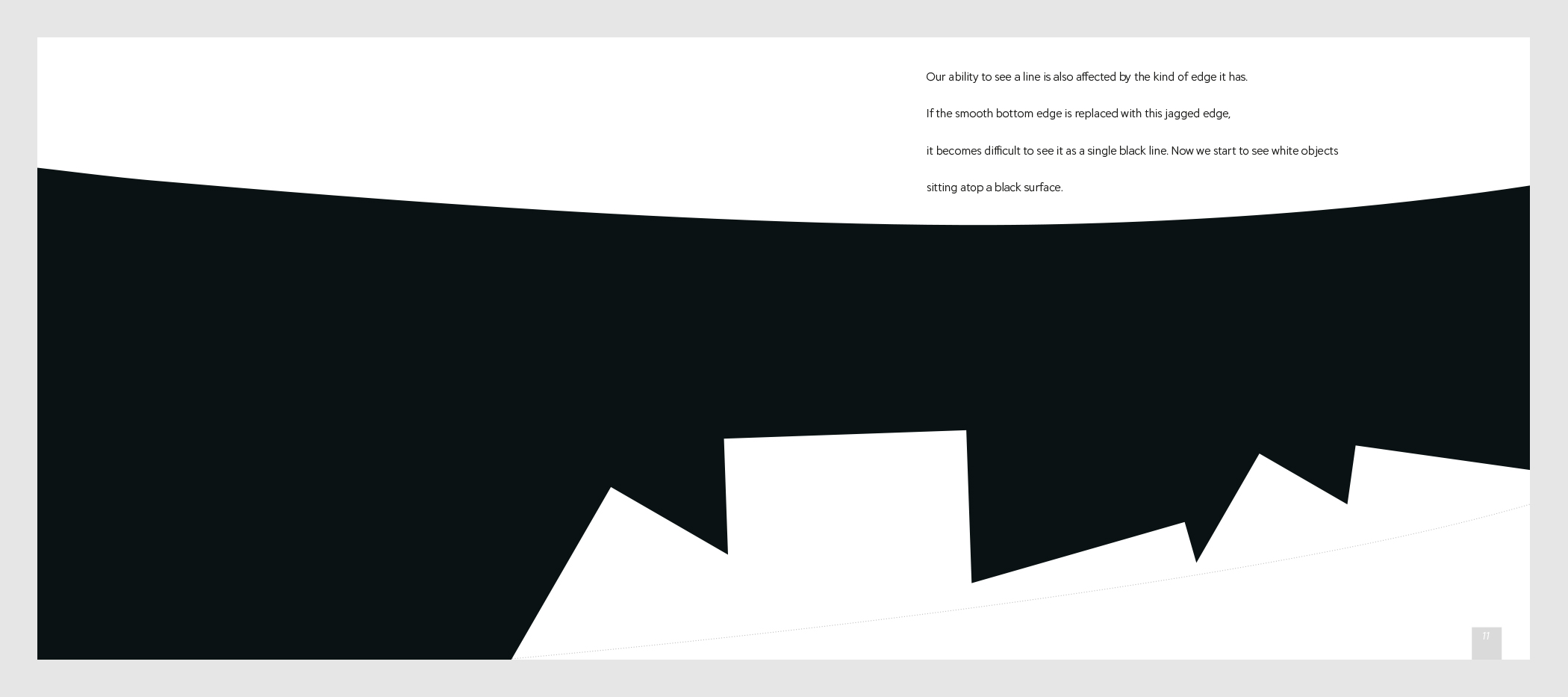
Some logos feel immediately resolved. You look at them and your brain says: done. Others feel like they're missing something, or like they're trying to show you two things at once.
The difference is gestalt — the set of perceptual principles by which the brain groups visual elements into wholes. For logo designers, three gestalt rules matter most:
Closure: The eye will complete a shape if most of its boundary is present. This is why negative space logos work. The FedEx arrow, the WWF panda, the NBC peacock — none of these are fully drawn. The brain fills in the gaps and discovers the form, which creates engagement and memorability. You can use this deliberately: instead of drawing a complete letterform, remove strategic sections and let the counter-shapes do the work.
Continuity: Forms that share a directional flow are perceived as connected, even without touching. A swoosh that curves through a letterform links the two without a physical bond. Use this when you want to imply motion or connection between elements.
Proximity and similarity: Elements that share spacing or visual properties group together automatically. When your icon and wordmark are spaced incorrectly, the brain reads them as unrelated objects sitting next to each other — not as a unified brand mark.
Line vs. Shape: A False Distinction
Here's a useful mental model: there is no meaningful difference between a line and a shape in logo design. A line is just a very elongated shape. A shape is just a very short line.
What matters is the quality of the form — its edges, its weight, its direction, its relationship to surrounding space.
This matters when designing wordmarks. A letterform is not a collection of strokes. It's a collection of shapes, each with two edges that must work in harmony. When you're spacing letters (tracking and kerning), you're not moving characters — you're redistributing the shapes of the white space between them. Get the white shapes right and the black ones take care of themselves.
The same logic applies to logo icons. Don't think of your mark as "lines that make up a bird" or "strokes that form an abstract symbol." Think of it as a set of positive shapes and negative shapes that must balance each other. Negative space is not leftover — it's structural.
Cropping and Scale Change What a Form Is
Crop a circle tightly and it reads as a rectangle. Zoom into a curve and it reads as a straight line. Context and framing change the perceived character of a form — not just how it looks, but what it fundamentally communicates.
This has immediate practical consequences for logo placement. A logo designed in isolation will read differently when placed inside a circle (app icons), a square crop (social media profile), a horizontal strip (email headers), or embossed into a physical material. The edges that define your mark interact with the edges of its container.
Test your logo in every container format before finalizing it. Not just to check if it fits — but to check if it still reads as the same thing. A form that reads as confident and stable in a horizontal lockup can read as cramped and anxious inside a tight circle crop.
What This Means When You Brief a Designer
If you're an SMB owner working with a designer or using a logo generator, these principles give you a vocabulary to evaluate what you're getting:
- Does the mark read at 32px? If not, ask for a simplified version.
- Are the edges consistent? Curves that change tension arbitrarily signal rushed work.
- Does the negative space have shape? Good logos treat white space as designed form, not leftover area.
- Does it feel complete at a glance? If you have to look twice to understand it, so will your customers.
Great logo design isn't about finding the right concept or the right color. It's about building a mark where every edge is intentional, every form is in harmony with its neighbors, and the whole resolves instantly in the viewer's mind. That resolution — that moment of yes, I see it — is what makes a brand mark stick.
The edge is where it all begins.