How to Critique a Logo: A Designer's Framework
Stop Judging Logos by Gut Feel
Most business owners look at a logo concept and immediately think: do I like it? That's the wrong question. Personal taste is unreliable — it changes with mood, varies person to person, and has nothing to do with whether your logo will actually work in the market.
The right question is: does this logo do its job?
A logo's job is to communicate, not to impress. It needs to represent your brand's personality, connect with your target audience, and function across dozens of real-world applications — from a 16px favicon to a 3-meter signage banner. Here's a structured framework for evaluating whether a logo design truly delivers.
1. Start with the Brief, Not the Design
Before you look at a single pixel, pull out your original brief. What problem were you trying to solve? Who is your audience? What tone should the brand convey?
A logo that doesn't match the brief is broken — even if it looks beautiful. A playful, rounded wordmark might be charming, but it's wrong for a corporate law firm. A minimalist geometric mark might feel modern, but it could alienate the warm, community-focused customers a local bakery needs.
Ask three questions before any aesthetic judgment:
- Does this design reflect the brand's core personality?
- Would the target audience recognize this as "for them"?
- Is the emotional tone (serious, playful, premium, accessible) correct?
2. Test Simplicity Under Pressure
The best logos in history — Nike, Apple, WWF — are aggressively simple. Not because simplicity is easy, but because simplicity is what survives at scale.
A complex logo with gradients, multiple colors, fine details, and decorative typography looks fine on a computer screen. It falls apart on a rubber stamp, embroidered on a cap, or etched into metal.
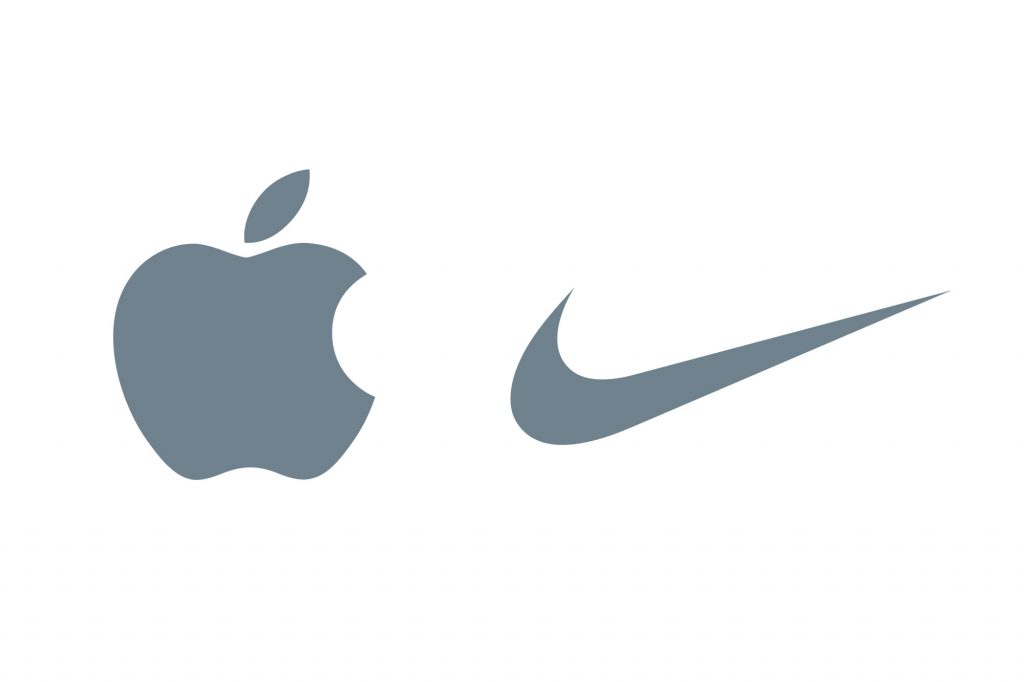
Run the reduction test: Can you describe the logo in one sentence? Can you sketch it from memory after seeing it once? If the answer is no, it's too complex.
The ideal logo has one dominant visual idea — a single shape, a distinctive letterform, a memorable silhouette — not five ideas fighting for attention.
3. Evaluate Scalability Systematically
Versatility is a technical requirement, not an aesthetic preference. A logo must work:
- At 16px (browser favicon, social media thumbnail)
- At full print size (business cards, brochures)
- At large format (signage, vehicle wraps, trade show banners)
- In single color (fax, stamp, embroidery)
- Reversed (white on dark backgrounds)
- Without color (black and white photocopies, engraving)
If any of these conditions breaks the logo — thin lines disappear, text becomes illegible, the concept collapses — it's a design problem that needs to be solved, not a client preference to be accommodated.
Practical check: Ask your designer to show you the logo at thumbnail size (around 32px wide) and in pure black. Both versions should still communicate the same core idea.
4. Analyze Typography as a Design Decision
Typography in a logo is not just "choosing a font." Every typographic choice carries meaning.
Serif typefaces (with small finishing strokes) convey tradition, authority, reliability. Law firms, financial institutions, and luxury brands often use them.
Sans-serif typefaces (clean, no serifs) feel modern, neutral, accessible. Tech companies, startups, and consumer brands gravitate here.
Script and handwritten styles suggest warmth, creativity, personal touch — common in food, wellness, and artisan brands.
Geometric and constructed letterforms feel systematic, precise, innovative — popular in engineering, architecture, and design.
When critiquing a logo, ask: does the typeface personality match the brand personality? A mismatch here is one of the most common logo design errors — and one of the most jarring to experienced eyes, even if non-designers can't articulate why something "feels off."
Also check: Is the type legible at small sizes? Are letter-spacing and line spacing intentional? Does custom lettering feel considered, or like an afterthought?
5. Interrogate Every Color Choice
Color is the fastest emotional signal in any logo. It communicates before the viewer reads a single word.
Common color psychology in logo design:
- Blue — trust, stability, calm (banks, healthcare, tech)
- Green — nature, growth, health (organic, finance, wellness)
- Red — energy, urgency, passion (food, retail, entertainment)
- Black/charcoal — premium, sophistication, authority (luxury, fashion)
- Yellow/orange — optimism, warmth, approachability (food, children, lifestyle)
But psychology is not a formula. Context and combination matter more than individual hue. A deep forest green reads very differently from a neon lime green, even though both are "green."
Evaluate: Does the color palette have a clear rationale? Is there a primary color that dominates, with secondary colors supporting? Does the logo work just as well in black and white (meaning the design structure is strong, not color-dependent)?
6. Assess Real-World Application
A logo doesn't live on a white presentation slide. It lives on business cards, packaging, social media profiles, vehicle wraps, employee uniforms, and website headers.
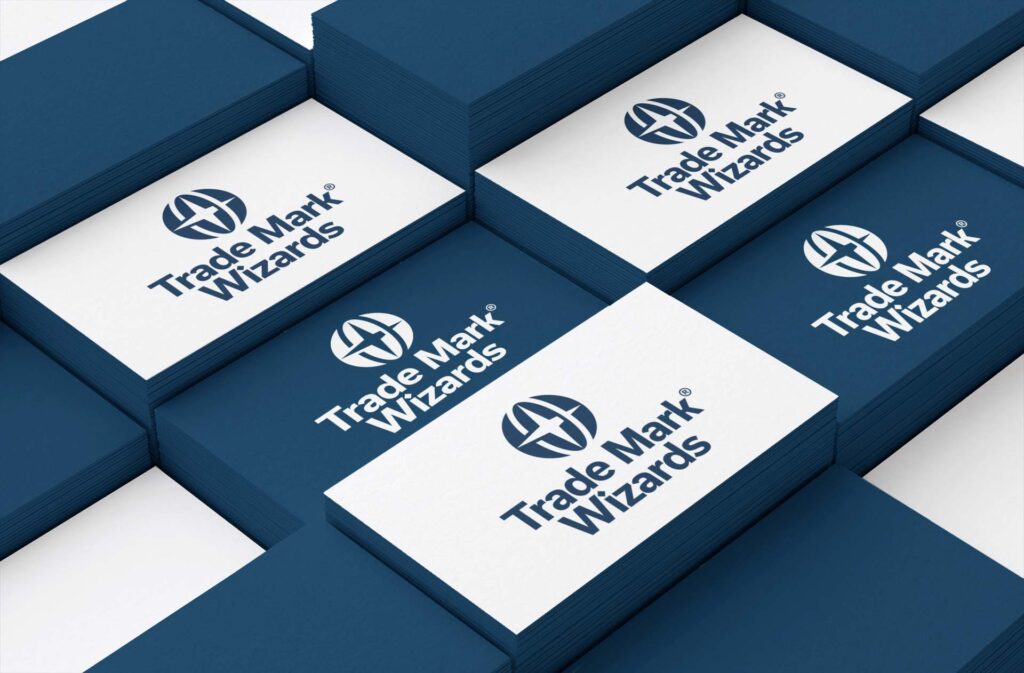
Ask to see mockups in context. A professional logo presentation should show the mark applied to at least 3–5 real touchpoints. This immediately reveals problems that don't show up in isolated presentation: Does the logo look small and weak on a social media profile photo? Does it get lost on a dark background? Is it difficult to reproduce on physical materials?
If you're only seeing a logo on a white background with a drop shadow, that's a presentation designed to hide problems.
7. Test for Longevity, Not Trendiness
Design trends cycle every 2–4 years. A logo built around a current trend will look dated quickly — and rebranding is expensive and disruptive.
Warning signs of trend-dependent design:
- Heavy gradients or duotone effects that depend on digital rendering
- Ultra-thin lines that are "in" but fragile at scale
- Highly specific illustration styles tied to a cultural moment
- Typography choices that feel borrowed from a famous brand's recent rebrand
A strong logo idea is rooted in the brand's core concept — a geometric shape derived from the brand's values, a letterform constructed from a meaningful visual metaphor, a color chosen for lasting psychological alignment. These choices age well because they're meaningful, not fashionable.
Ask: Would this logo have looked reasonable 10 years ago? Will it still feel intentional 10 years from now?
8. Separate Strategy from Preference
The hardest part of logo critique — especially when you're the client — is separating "I personally prefer X" from "X serves the brand better."
Your logo is not for you. It's for your customers.
A 55-year-old founder might personally prefer a conservative serif wordmark, but if the target audience is 25-year-old urban consumers, that preference works against the brand. A designer who loves minimalism might push a mark that's too abstract for a business where immediate clarity is critical.
Effective critique is always audience-first. When you feel the urge to request a change, ask: Am I doing this because it serves my customers better, or because I personally find it more appealing?
If the honest answer is "personal preference," hold that feedback lightly. If the answer is "it won't resonate with our audience" or "it doesn't work at small sizes" — that's actionable, strategic feedback worth acting on.
A Framework You Can Actually Use
Next time you're sitting across from logo concepts, run through this checklist:
- Brief alignment — Does it match the original strategy?
- Simplicity — One idea, memorable in seconds?
- Scalability — Does it work at 16px, in black and white, reversed?
- Typography — Does the typeface personality match the brand?
- Color — Is there rationale behind every color choice?
- Application — Have you seen it on real touchpoints?
- Longevity — Grounded in concept, not trend?
- Audience first — Are your reactions strategic or personal?
A logo that passes all eight checks is ready for the world. One that fails even two or three deserves another round — not because it looks bad, but because it won't do its job.
That's the only standard that matters.