Logo Design on a Tight Schedule: Make It a Priority
Most small business owners feel like they never have enough time to think seriously about their logo and brand identity. The reality? It's not a time problem — it's a priority problem. And once you reframe that, you'll find that even 30 focused minutes can produce real results.
Why Logo Design Gets Pushed to the Back Burner
Running a business means wearing a dozen hats at once. Logo design feels like something you do once and forget about. But a weak logo actively costs you credibility — every time a potential customer sees your brand, they're making a split-second judgment.
The problem isn't that you can't improve your logo. It's that "fix the logo" never feels urgent enough to schedule.
Here's a reframe: instead of "I don't have time to work on my brand identity," try "my brand identity isn't a priority right now." That shift forces honesty. If you're losing customers at first impression, maybe it should be.
What 30 Minutes of Focused Design Work Actually Accomplishes
You don't need a full redesign session to move your logo forward. Focused micro-sessions compound over time. Here's what's realistic:
- 30 minutes: Audit your current logo against one principle (contrast, spacing, scalability)
- 1 week (3.5 hours): Research competitor logos in your industry, identify patterns and gaps
- 1 month (14 hours): Sketch 20+ concepts, narrow to 3, refine the strongest one
- 3 months (40+ hours): Complete rebrand with usage guidelines
The design process doesn't require marathon sessions. It requires consistency.
The Core Principles Worth Prioritizing First
If you're going to invest limited time, focus on the fundamentals that deliver the highest visual return.
1. Geometric Construction
The most enduring logos are built on simple geometric shapes. Circles suggest completeness and trust. Triangles suggest direction and ambition. Squares suggest stability and reliability.
When sketching a logo, start with basic geometry and ask: what shape best represents the core value of this business? A financial firm and a bakery should feel structurally different — not just different in color.
Grid systems formalize this. Many professional logo designers work on a construction grid where every curve and line aligns to a common unit. Even if you're not designing from scratch, understanding grid-based construction helps you evaluate whether a logo feels deliberate or arbitrary.
2. Color Psychology for Small Business Logos
Color is often chosen by preference rather than strategy. This is a mistake that's easy to fix.
Color associations in logo design:
- Blue — trust, reliability, professionalism (banks, tech, healthcare)
- Green — growth, health, sustainability (food, wellness, finance)
- Red — energy, urgency, appetite (food, retail, entertainment)
- Black/charcoal — luxury, authority, timelessness (fashion, legal, premium services)
- Yellow/gold — optimism, warmth, value (food, children's brands, hospitality)
For SMB owners, the practical rule is: pick one dominant color that matches your industry's trust signals, then one accent color that differentiates you within that space.
Avoid using more than two colors in a primary logo. Complexity increases reproduction cost and reduces legibility at small sizes.
3. Typography Is Half the Logo
Most business owners underestimate how much the typeface carries the brand personality.
Key font pairing principles for logos:
- Contrast, not conflict — pair a serif with a sans-serif, not two competing serifs
- Weight hierarchy — the brand name should be the heaviest element; taglines should be lighter
- Optical sizing — a font that looks great at 72px often needs tracking adjustments at 12px
For wordmark logos (text-only), the typeface is the logo. Custom lettering or carefully modified existing fonts outperform stock typefaces used unchanged — because if anyone can download and use the same font, your logo isn't distinctive.
If you're using a standard font, modify at least one letterform to create a unique anchor. This is faster than building from scratch but still results in something proprietary.
4. Negative Space: The Designer's Shortcut to Sophistication
Negative space logos feel intelligent because they reward attention — viewers discover a second meaning embedded in the white space.
The FedEx arrow, the NBC peacock, the Amazon smile — these aren't accidents. They're designed moments that create memorability without adding visual clutter.
For SMB logos, negative space is a practical tool even without a hidden image. Generous spacing around letterforms improves legibility and makes a logo feel more premium. Crowded, tight logos read as budget.
When evaluating your logo, print it at business card size and at signage size. Does the spacing still feel intentional at both extremes?
5. Scalability Testing Before You Finalize Anything
A logo that only works large isn't really a logo — it's an illustration.
The scalability checklist:
- Does it work in black and white?
- Does it work at 16×16 pixels (favicon)?
- Does it work reversed (white on dark background)?
- Does it work embroidered or engraved, where gradients disappear?
If the answer to any of these is no, the logo needs simplification. Complexity is the enemy of versatility. The best logos are simple enough to work in a single color at any size, but distinctive enough to be immediately recognizable.
Building a Design Reference Board
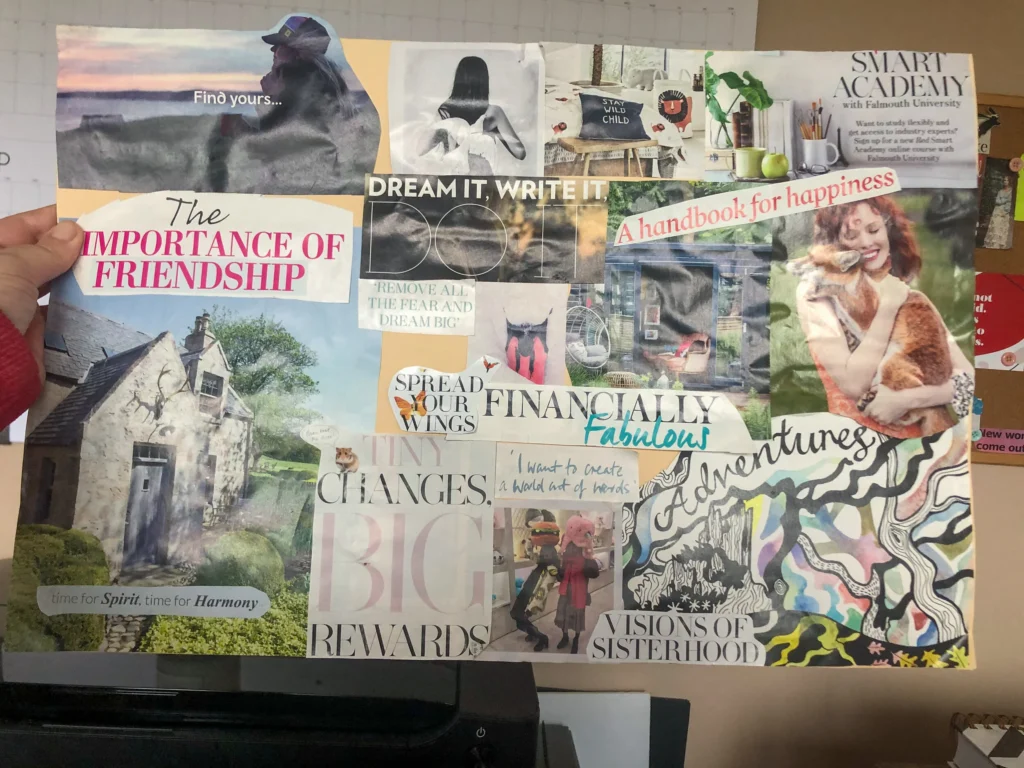
One of the most efficient ways to develop your design eye is to maintain a curated collection of logos you admire. This is the designer's equivalent of a vision board — except instead of lifestyle images, you're collecting visual references that define the quality standard you're working toward.
Organize your reference board by:
- Industry — what do the best logos in your sector have in common?
- Style — geometric vs. organic, minimal vs. detailed, classic vs. contemporary
- Color — what palette approaches recur in successful brands?
Spending 10 minutes a week adding to this collection trains your eye passively. Over months, you'll develop pattern recognition that directly improves your design decisions.
The Prioritization Framework for Logo Decisions
When you're short on time and facing a logo decision, use this hierarchy:
- Does it work at small scale? — If not, simplify before anything else
- Is the typography legible? — Clever design that sacrifices readability fails at its primary job
- Does the color feel intentional? — Can you explain why you chose it beyond "I like it"?
- Is there one clear focal point? — Logos that try to say everything say nothing
One strong, well-executed idea beats three competing ideas every time.
Making Brand Investment a Habit
The most successful small business owners treat their brand identity the way they treat their finances — as something that requires regular, small investments rather than occasional large overhauls.
Set one brand-related micro-goal per week. Audit your logo against a single principle. Research one competitor's visual identity. Sketch three alternative mark directions. Test your logo on a new background color.
None of these require a freelance designer or a full rebrand budget. They require 30 minutes and the decision to make your brand identity a priority.
Because the businesses that show up consistently, with a clear and confident visual identity, are the ones customers remember — and return to.